Why Austin Lehman Refuses to Lead Alone: The CEO's Case for Radical Accountability


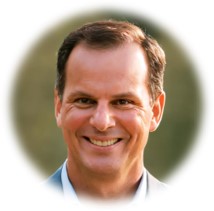
Austin Lehman has a blunt assessment of entrepreneurial isolation: it leads to failure.
As CEO of Remodel Health, a national health benefits firm serving organizations with 50 to 500 employees, Lehman has built a business on innovation and service. But he's quick to admit that longevity in business isn't just about smart strategy or market timing. It's about not doing catastrophically dumb things. And the best defense against impulsive, business-killing decisions? Godly counsel.
"Plans fail for lack of counsel, but with many advisors they succeed," Lehman says, quoting Proverbs 15:22 with the conviction of someone who's seen it play out in real time. "If you want to fail, avoid counsel. If you want to succeed, get many advisors. It's pretty binary actually."
That conviction has shaped the last 15 years of Lehman's leadership. He's been part of Christian CEO roundtables through Truth at Work, C12, and now Kingdom Factor. Six months into his current group led by Ray, Lehman describes it as a table surrounded by "gray hairs"—seasoned leaders with the scars and T-shirts to prove they've navigated what he's facing now.
The Loneliness of Leadership
Lehman is candid about why peer groups matter: there are things a CEO simply can't share with their team or even their spouse. "You can't tell your team everything. You probably shouldn't tell your wife everything either—she could get really discouraged," he explains. "You need another place that's a sounding board, where you can run problems past godly men and see them in proper perspective."
This isn't about secrecy or withholding trust. It's about stewardship. Leaders carry the weight of decisions that could make or break livelihoods, and processing that weight requires wisdom beyond what any single person—no matter how loyal or loving—can provide.
"Entrepreneurs tend to be impulsive, and impulsivity can cause real problems. You can do ten years of great things, and one bad decision can wipe it all out."
Lehman has seen it happen. The entrepreneur who mortgages the farm on a hunch. The leader who makes a hiring decision in haste and regrets it for years. The CEO who lets pride override counsel and watches the consequences unfold in slow motion. These aren't hypothetical cautionary tales—they're the wreckage that litters the road of independent leadership.
The Kingdom Factor Difference
When Lehman transitioned out of C12 earlier this year, he evaluated the "big three" Christian CEO groups. He chose Kingdom Factor because it aligned with what he was looking for: a community of similarly-sized businesses focused on living for Jesus in the marketplace.
Six months in, he's finding what he expected: sharp, experienced leaders who challenge his assumptions and help him think through decisions he wouldn't have considered otherwise. The half-day-a-month format works for him—he also participates in a YPO group, so he's dedicating a full day each month to peer accountability.
What's the highest value? "Godly counsel," Lehman says without hesitation. It's what he's looking for most, and it's what the group delivers best. The prayer, the imperatives, the crucial conversations—they all matter. But the core function is iron sharpening iron, wise voices speaking truth into his leadership.
A Proactive Posture on Wisdom
Lehman offers a fresh take on the familiar Proverbs passage about counsel. "I've never actually said it proactively before," he reflects. "The verse is a truism—it's reporting after the fact. If you look back at an enterprise that failed, it lacked counsel. If it succeeded, it had many advisors. But you can flip that into an imperative: if you want to succeed, get many counselors. If you want to fail, don't."
It's a stark framing, and Lehman owns it. He laughs as he imagines the LinkedIn post: "If you want to fail, don't get any advice. If you want to succeed, get wise counsel." But beneath the humor is a conviction forged over years of watching leaders win or lose based on whether they were willing to be challenged.
And not just any counsel will do. Lehman points to Rehoboam, Solomon's son, who rejected the wisdom of elders and listened to his peers instead—a decision that split a kingdom. "You better ensure your advisors are wise," Lehman says. "But I think our problem in America is that we don't even get to step two, which is evaluating counsel. We don't get any counsel at all. We're too independent."
Work as Service, Not Survival
Lehman sees his participation in Kingdom Factor as part of a larger narrative—one that reframes work itself. "Christians have a wonderful, compelling, beautiful narrative arc," he says. "We see work as service to the world. If you're just waking up each day to make money, pay the bills, and retire as soon as possible, that's not the Christian ethic."
The Christian ethic, as Lehman describes it, is this: I do something to serve my neighbor and the world, and God uses that service to provide for my family and my needs. "It's a beautiful picture," he says. "And when you add the kingdom factor, it changes everything. Those are the kinds of companies people want to work at and be part of."
"He who walks with the wise grows wise, but a companion of fools suffers harm."
Lehman's father has repeated that proverb to him hundreds of times. It's shaped how he chooses his advisors, his business partners, and the communities he commits to. Because the people you're around don't just influence you—they shape the trajectory of your leadership, your legacy, and your faithfulness.
The Imperative for Every Leader
Lehman's advice to Christian business leaders considering a peer advisory group is simple: the Word of God already tells you what to do. "Plans fail for lack of counsel, but with many advisors they succeed," he repeats. "If you believe the Bible, this isn't optional."
Has Kingdom Factor helped him grow his business leadership? Yes. Does the value exceed the financial investment? Yes. Would he recommend it to other Christian leaders? Yes—for all the reasons Scripture makes clear.
After 15 years of roundtables and peer groups, Lehman can point to decisions he didn't make, mistakes he didn't commit, and impulsive moves he didn't follow through on—all because he had wise voices in his life. "I've made better decisions. I've thought things through. I've considered alternatives I wouldn't have thought about," he says. "Not doing dumb things—that's half the battle."
In a culture that glorifies the solo entrepreneur and the self-made leader, Lehman's posture is countercultural. He refuses to lead alone. He surrounds himself with gray hairs and battle scars. He believes God's design for leadership includes community, accountability, and the humility to admit, "I could be wrong. What am I missing?"
That posture isn't weakness. It's wisdom. And for Austin Lehman, it's non-negotiable.
Written by
Kingdom Factor
Faith-driven executive coaching and peer advisory groups.
Interview with
Autsin Lehman
CEO at Remodel Health
Indianapolis, IN
Continue Reading
More articles in KF Member Stories
.jpg) KF Member Stories
KF Member StoriesJason Lakes: When God Calls You "Beyond Success"
Jason Lakes didn't set out to help build a roofing company with a global mission — but a single day in a Dominican sugarcane village changed everything. Here's how faith reshaped his leadership from the ground up.
.jpg) KF Member Stories
KF Member StoriesAl Wurster: Building a Legacy Beyond 88 Years
After five family members retired and his wife passed away, Al Wurster faced a crossroads. What he found in a faith-based peer group transformed not just how he runs his 88-year-old construction company — but how he rebuilt his life.
 KF Member Stories
From Freelancers to Business Owners: How One Animation Team Found Their Focus
Nick Rieth and his partners knew something had to change. They were talented creatives pulling in different directions, unsure if their business would survive. Then they found a community that helped them see themselves differently.
WANT TO SHARE YOUR STORY?
Join our community of faith-driven leaders and share how God is working in your business.
Get Started