KF Best Practice - Building Your Business Momentum

Listen to this article
In a world constantly seeking growth and impact, the concept of momentum stands as a powerful catalyst. But how do we truly build and sustain it, not just in business, but in every aspect of our lives? Ken Gosnell, drawing profound insights from the early church in the Book of Acts, unveils a 6-step biblical framework for cultivating unstoppable momentum.
The Enduring Wisdom of Scripture
Gosnell emphasizes that the Bible, a timeless guide, offers solutions to every challenge we face. "There's not an issue or problem that I face in my life or my business that the Bible doesn't give us insight and encouragement on," he states. This foundational belief underpins his approach to building momentum, asserting that biblical principles are not just ancient texts but practical blueprints for modern success.
Research from Harvard Business School highlights the tangible benefits of momentum, showing that "momentum-powered firms delivered 80% more shareholder value than their slower rivals." This underscores the critical importance of understanding and harnessing momentum, both personally and professionally.
The 6-Step Biblical Momentum Framework
Inspired by the rapid growth of the early church, Gosnell outlines a clear, actionable framework:
Step 1: Find Your Message (Acts Chapter 2)
The genesis of momentum lies in clarity of purpose. Just as Peter's clear message on Pentecost led to 3,000 conversions, leaders must define their core message. "Clarity is key for leadership and leaders," Gosnell asserts. Whether in business or personal life, understanding what drives you – your mission, your 'why' – is paramount. This clear, concise message should be the guiding force, much like God's direct communication to leaders like Moses, Noah, and Abraham.
Step 2: Share Your Message (Acts Chapter 3)
Once your message is clear, the next step is to actively share it. The disciples didn't keep their message to themselves; they expanded their reach and involved others. In a business context, this means identifying and engaging loyal followers – those who believe in your vision, even if they don't directly use your product or service. These advocates become powerful conduits for spreading your message. Gosnell highlights the power of consistent activity in sharing your message, noting that "activity creates activity." Utilizing diverse distribution channels, from social media to referrals, amplifies your reach and builds initial traction.
Step 3: Connect Your Message (Acts Chapter 4)
Connecting your message involves identifying and reaching those who are most interested and receptive. Peter and John, in their attempt to reach the Sanhedrin, sought out those they believed would connect with their message. For businesses, this translates to understanding your ideal customer and tailoring your message to resonate with their specific needs and desires. The authenticity of your message is crucial, as people connect not just to products, but to the underlying mission and values. This deep connection fosters loyalty and transforms customers into passionate advocates, much like the early church, whose members were "all filled with the Holy Spirit and spoke the word of God boldly."
Step 4: Expand Your Message (Acts Chapter 5)
Growth often brings challenges, but as the early church demonstrated, opposition can lead to greater opportunity. Expanding your message means seeking multiple streams of revenue and distribution. Companies often miss the opportunity to connect customers not just to a product, but to a mission. Gosnell cites JC Penney's "Golden Rule Store" as an example of a business built on a powerful mission that transcended its products. This mission-driven approach creates a deeper, more enduring connection with customers, fostering long-term momentum.
Step 5: Replicate Your Message (Acts Chapter 6)
To sustain momentum, you must empower others to carry your message. The early church appointed deacons to expand their reach, recognizing the need for replication. In business, this means cultivating a proven referral process that encourages and rewards customer advocates. These "fans" become invaluable in sharing your brand and message. The Net Promoter Score, a widely used business metric, helps identify these advocates (those who rate their experience an 8, 9, or 10) who are most likely to promote your offerings. Nurturing these relationships is key to organic, sustainable growth.
Step 6: Improve Your Message (Acts Chapter 7)
Momentum is not static; it requires continuous refinement. As new customers emerge and the marketplace evolves, your message must adapt and improve. Stephen's more pointed preaching in Acts 7 illustrates the dynamic nature of communication. New customers offer new opportunities, and a strong team helps refine the message. Companies that stay current and aren't afraid to reinvent their message attract new customers who might not have resonated with older iterations. Gosnell challenges leaders to distill their message into "four words or less," making it succinct, memorable, and impactful, much like Nike's "Just Do It" or Chick-fil-A's "Eat More Chicken."
Personal Momentum: The "Well Done" Life
Beyond business, this framework applies profoundly to personal life. Gosnell shares his personal "one sentence" – "Well Done." This powerful aspiration drives his actions, aiming for a life that elicits this commendation from God, family, and colleagues. He encourages everyone to define their own "one sentence," a guiding principle that provides clarity and fuels personal momentum.
Measuring Momentum: Wins and Gratitude
Measuring momentum isn't always about traditional metrics. Gosnell suggests focusing on "win lists" – acknowledging and celebrating successes, big or small. Like the one grateful leper returning to Jesus, recognizing blessings fuels momentum. He also emphasizes the importance of energy levels as a personal measure, urging leaders to operate at their highest possible level.
By embracing this biblical framework, leaders can unlock a powerful, sustainable momentum that transforms not only their businesses but also their lives, leading to a profound and lasting impact for the Kingdom.
Written by
Kingdom Factor
Faith-driven executive coaching and peer advisory groups.
Interview with
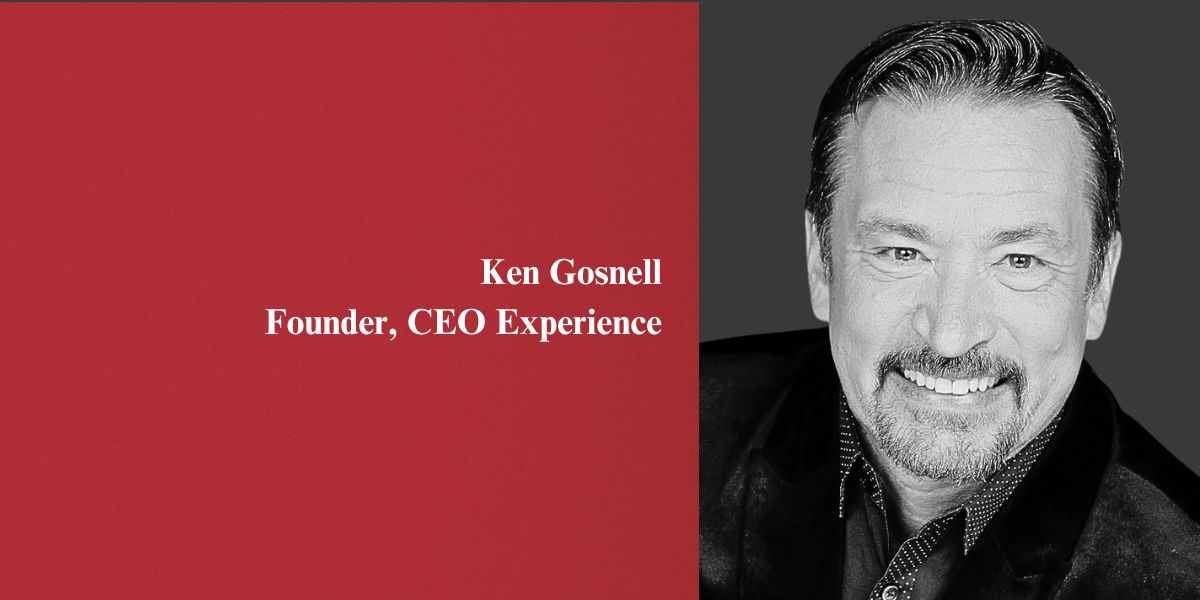
Ken Gosnell
Owner at CEO Experience
Lakeland, FL
Continue Reading
More articles in Faith in Business
.jpg) Faith in Business
Faith in BusinessThe Three-Month Fix That Became a Three-Year Turnaround: Steven Flowers on Saving a Family Shelter
Steven Flowers walked into a shelter with less than two months of cash and a live bed bug taped to his door. Three years later, it is serving twice as many families. Here is how a pastor's phone call changed everything.

.jpg) Faith in Business
Faith in BusinessStay Off the Bench: How Kent Evans Is Equipping Dads to Make Disciples
Kent Evans started with a simple question in 2010: what if dads had tools to open Scripture with their sons? Sixteen years later, Manhood Journey reaches over a million people a year.
 Faith in Business
Mary Love-Harris Learned the Hard Way: Christian Doesn't Mean Poor
After years of underpricing her calling and absorbing church hurt, Mary Love-Harris heard God say something that changed everything: 'I never told you to do anything for free.'

WANT TO SHARE YOUR STORY?
Join our community of faith-driven leaders and share how God is working in your business.
Get Started