The CIO Who Found the Greatest Leadership Manual at Age 59
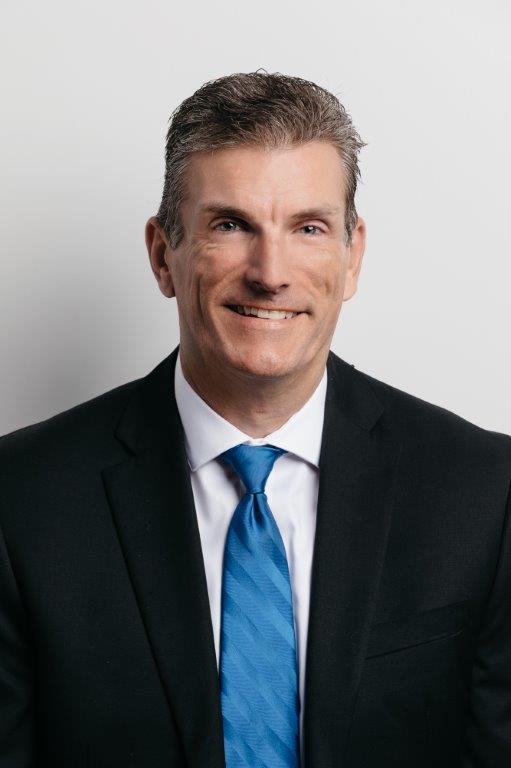
.jpg)
The Leader Who Didn't Know He Was Following a Blueprint
Rick had already done the hard things. He'd climbed from computer operator to CIO. He'd helped transform a $1.6 billion business slated for sale into a viable, thriving company. He'd led teams through impossible deadlines, navigated poor leadership from above, and stood in the gap for his people when it cost him something. By most measures, he had figured out this leadership thing.
There was just one problem. He hadn't yet opened the Book that described everything he'd been doing.
That changed at 59 — when his wife, Nancy, gave him a Bible for Christmas.
Starting From the Bottom, Building From the Ground Up
Growing up Rick set his intentions to attend and graduate from college. Even though money was tight, Rick earned his way to Lawrence Tech, and during his senior year, Ford Motor Company came on campus and selected him from a pool of hundreds of candidates.
He had left a $5-an-hour job at Montgomery Ward to become a computer operator for $6. The machines he ran were Burroughs 6900's — CPUs the size of a small room. From that starting point, he committed to learning every domain: factory floor systems, office automation, networking, applications, design, and eventually management.
At 24 or 25, Rick landed his first supervisory role. Several of his direct reports were well into their 50s. He learned fast that age alone guarantees nothing — not wisdom, not cooperation, and not character.
"I figured out really quick that age doesn't matter. You have the same tendencies for success and failure, good and bad, no matter what in the workplace."
One early test came in the form of a veteran employee named Tom, a man with nearly four decades at the company who made it clear that he didn't appreciate Rick's changes. In an early performance review, Tom told Rick plainly: he had never hated coming to work as much as he did now. Rick didn't flinch, didn't overreact, and didn't back down. He simply said he wasn't going anywhere — and maybe they could work something out.
About two years later, Tom personally invited Rick to his retirement party. Nancy baked him a cake. Rick calls it one of his biggest lessons in not overreacting and they remained friends.
The Cost of Climbing — and What Gets Left Behind
Rick eventually reached the role he had always wanted: CIO, where the buck stopped with him. He loved the direct work with his team. But the higher he climbed, the more time he spent managing upward — navigating executive politics, absorbing pressure from poor leaders above, and justifying sacrifices that quietly added up.
He traveled significantly every month. Rarely worked fewer than ten hours a day. Weekends blurred into the job. On his tenth wedding anniversary, he had flowers delivered to the hotel in advance. Then his phone rang: all data center operations had gone down worldwide. He spent the getaway on calls.
"You don't realize it because that's what you're supposed to do. You're in a leadership position and you've got to step up. That's how you justify it every time. That's the job."
He pauses on that word — justify. Because looking back, he sees it clearly now. He was chasing the prizes the world told him to chase: the title, the salary, the house, the cars. He chased them hard. And he got them. But the ledger had entries he didn't fully see until much later.
Guided Before He Knew to Follow
Here is what makes Rick's story remarkable: he was practicing servant leadership for decades before he ever read a word of Scripture about it. He deflected credit to his team. He protected his people from poor leadership above him. He told his direct reports they would always get the truth from him, even when the truth was uncomfortable.
In one memorable moment, his team completed a major project that earned the attention of the CEO. The executive team asked for a presentation. Rick's first instinct was not to put on his best suit and take the stage himself. He brought in the team members most responsible for the work and let them present.
"I was just like a proud parent sitting in the background smiling. And when they came back to me, one of them said, 'That's the first time I've ever presented to a CEO — and I've worked here for 26 years.' I mean, that just blew me away."
He wasn't reading Proverbs then. He wasn't studying what Scripture says about humility or servant leadership. But now, looking back, he recognizes the fingerprints everywhere.
"He was guiding me even when I wasn't focused on him," Rick says quietly. Psalm 32:8 stopped him cold when he finally read it: I will instruct you and teach you in the way you should go; I will counsel you and watch over you. "If I would have known that earlier," he says. "Boy."
A Bible Unopened for a Year — Then Everything Changed
When Nancy gave Rick the Bible at Christmas, he didn't open it for twelve months. Then he retired. And something shifted.
"I'm a big goal setter," he says. "And I said, okay — this should be a goal." He started reading. He didn't stop. He has read through it multiple times since. Now the Bible is the first thing he picks up every morning, before anything else.
The transformation wasn't just intellectual. It reshaped his giving, his time, his priorities. Recently Rick and Nancy served at their church's Million Meals initiative — an effort that has packaged over five million meals for people in need. He had actually done a similar team-building exercise in the corporate world once. The difference, he says, hit him hard.
"In corporate, it's like, yeah, you're helping somebody and it's a great team-building thing. But this last time, I looked at that meal packet and compared it to what was on my table the night before. That's a big difference. And I still need to do a lot more."
He also reflects on what he now sees differently about church. As a kid, attending felt like an obligation — go or face consequences. Now he can't wait to go. "I want to learn something from someone else," he says. "I have so much to learn that I need more mornings."
Standing in the Gap When It Costs Something
During the COVID era, Rick faced one of his sharpest leadership tests. A top-down directive required every manager to personally ask each employee about a specific personal decision — one that cut against the religious convictions of one of Rick's Christian leaders.
That leader came to Rick and said plainly: this conflicts with my faith. He was prepared to deal with the consequences.
Rick didn't hesitate. He told the man he didn't have to comply, took the matter upward on his behalf, and absorbed the pushback. The criticism from above was sharp — a manager should just follow directives, they said. Rick held the line anyway.
"I commended him, because I don't know if I would have done that. He stood up for his faith. That's not easy. When you actually see somebody do it, that's pretty impressive."
Rick is clear-eyed: he survived decades of speaking truth to power because he did it professionally and respectfully. But he's also honest that the guidance to hold that line came from somewhere beyond his own resolve.
What Rick Would Tell His 22-Year-Old Self
Rick doesn't dress up his advice or make it sound easy. He simply tells the truth — the kind of truth he built his reputation on.
It's never too late. He started reading Scripture at 59. He has since watched his nephews engage their faith decades earlier and thought: that 15- or 20-year head start is phenomenal. Whatever age you are reading this, you have not missed your window.
Keep your eye on the real prize. Rick chased the worldly scoreboard — degrees, titles, money, houses, cars. He calls them what they are: idols. "The prize is Him, and it's others and not self. The earlier you can recognize that — boy."
Read to personalize, not to check a box. His first time through the Bible, he was going cover to cover just to say he'd done it. Then something changed. He started asking: what is this telling me? What can I learn about who God is? That shift turned reading into relationship.
Stay on guard. Rick doesn't soften this one. "The evil doesn't stop. The temptations never stop. It's constant. You've got to recognize it and push back." He says it plainly: the enemy is relentless. So is the need for vigilance.
The Book He Wishes He'd Found Sooner
Rick can count on one hand the truly excellent leaders he worked under. He needs more appendages to count the poor ones. That scarcity of great leadership is part of what drove him to try to be different — to protect his people, develop them, and tell them the truth even when it was inconvenient.
He did all of that before he ever cracked open the Book that describes it best.
"If somebody asked me what advice I'd give a young leader — go learn from the greatest Leader of all. Someone who serves. Someone who builds their team up. Someone who has patience, who teaches, who doesn't think about self. Why wouldn't you pick the Book up? Nobody tells you it's there."
Rick holds that Bible now and knows exactly what he is holding. Not just another leadership book. God's word — in his hands, on his table, first thing every morning.
For anyone still chasing the worldly scoreboard, still justifying the sacrifices, still managing without leading — Rick's story carries a quiet and powerful question: What if the greatest leadership blueprint you've never read has been waiting for you all along?
It's not too late to find out.
Written by
Charles Anderson
Kingdom Factor Coach in Iowa with decades of financial leadership experience, passionate about equipping Christian leaders to grow and make Kingdom impact.
Continue Reading
More articles in Faith in Business
.jpg) Faith in Business
Faith in BusinessThe Three-Month Fix That Became a Three-Year Turnaround: Steven Flowers on Saving a Family Shelter
Steven Flowers walked into a shelter with less than two months of cash and a live bed bug taped to his door. Three years later, it is serving twice as many families. Here is how a pastor's phone call changed everything.

.jpg) Faith in Business
Faith in BusinessStay Off the Bench: How Kent Evans Is Equipping Dads to Make Disciples
Kent Evans started with a simple question in 2010: what if dads had tools to open Scripture with their sons? Sixteen years later, Manhood Journey reaches over a million people a year.
 Faith in Business
Mary Love-Harris Learned the Hard Way: Christian Doesn't Mean Poor
After years of underpricing her calling and absorbing church hurt, Mary Love-Harris heard God say something that changed everything: 'I never told you to do anything for free.'

WANT TO SHARE YOUR STORY?
Join our community of faith-driven leaders and share how God is working in your business.
Get Started