Choose the Hard Right Over the Easy Wrong: Building a Business on Biblical Truth
Listen to this article
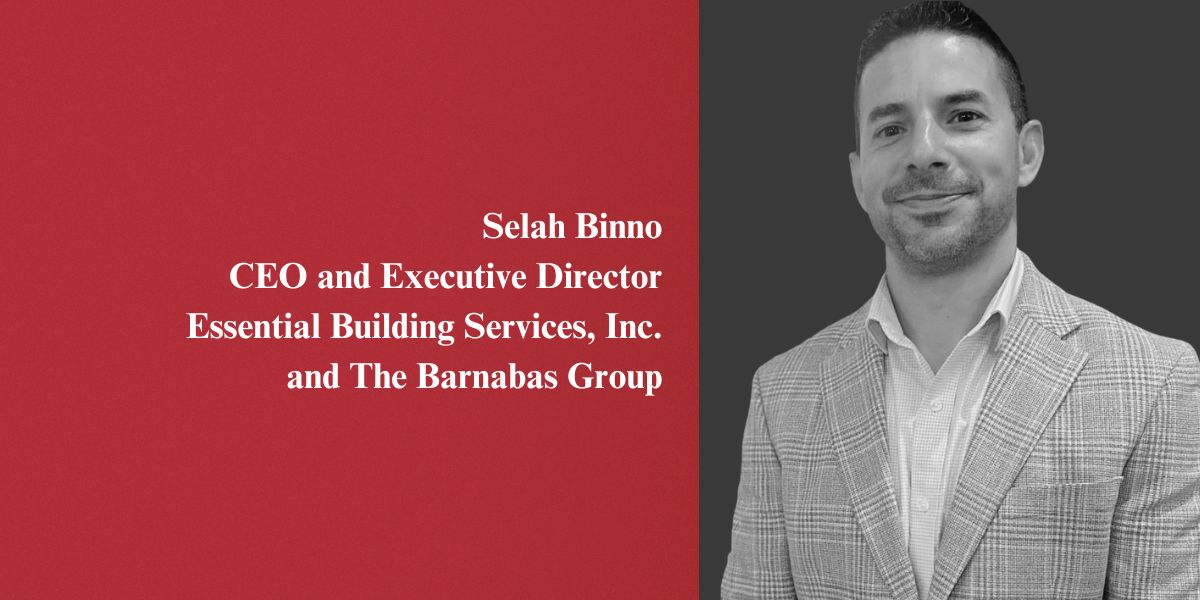
In a world often driven by the pursuit of profit and personal gain, Selah Binno, a multi-faceted leader at the helm of Essential Building Services, Inc. and the Executive Director of The Barnabas Group in San Diego, offers a refreshing and profoundly impactful perspective. His approach to business and leadership is not merely about success, but about intentional faith integration—a journey he describes as living out one's faith now, rather than deferring it to a later, more convenient time.
Selah's companies, particularly Essential Building Services (EBS), thrive on three core values: quality, reliability, and high ethics. These aren't just corporate buzzwords; they are deeply rooted in his Christian faith. "Quality," he explains, "stems from the biblical principle of doing everything as if unto the Lord. Reliability reflects the commitment to doing what you say you will do," a testament to integrity and trustworthiness. And "high ethics" is a direct outflow of the Christian call to truth and righteousness.
For Selah, these pillars form the foundation of a business that honors God and earns lasting trust in the marketplace.
Stewardship Over Ownership: A Foundational Shift
A cornerstone of Selah's philosophy is the concept of stewardship. He views his time, talent, and treasure not as his own to possess, but as resources entrusted to him by God. This fundamental shift from ownership to stewardship redefines how he operates his businesses and makes financial decisions. It move behind simply tithing or giving a portion of profits; it influences every aspect, from annual company charitable giving to how employees are treated and supported.
"When stewardship is the basis for the decision-making, then your time, your talent, your treasure, they start to be allocated a little bit differently," Selah explains. This means focusing towards a constant awareness of how God wants to use the company's resources for good. Whether it's funding the personal needs of non-Christian staff, providing hygiene kits and sleeping bags to the homeless, or even partnering with a ministry that serves victims of sexual trafficking so that a survivor can experience a bridge to a new life, the company's actions are driven by a purpose beyond profit.
Selah recognizes not all organizations can be as unorthodox and planned with financial resources as one can be in their privately held companies. In his experience as a CFO for churches, he noticed a tendency to be more conservative with "God's money" compared to personal or company funds. However, even there, he pushed for allocation that would help ensure financial resources would have impact outside of the organization. He emphasizes that true stewardship extends to all resources, personal and corporate, and encourages a prayerful, thoughtful, and intentional approach to their allocation.
Living Faith Now, Not Later: The Urgency of Integration
A powerful message Selah shares with other Christian business leaders is the imperative to integrate faith into businesses now, and not to defer it to a future, more convenient time after they've built the business to some predefined level of success. He challenges the common narrative of working hard to build a business to a certain point, only then to fully engage in ministry or faith-driven endeavors.
"We don't achieve [success] to then [fully live out] our faith," Selah asserts. He views the idea of waiting for a perfect moment as a "trick of the enemy," a perpetual dangled carrot that hinders individuals from being obedient to God and His word. There will always be reasons—financial pressures, growth goals, or personal aspirations—to delay. However, Selah argues that delaying means missing out on crucial opportunities to impact the world in the way the present world around them needs it, in this particular time, with the current ability they have.
He encourages leaders to start where they are, with what they have, and to allow God to scale their efforts. "God will scale things ... we gotta get in the pool and start swimming around." This active engagement, rather than passive waiting, reveals opportunities for ministry and impact that might otherwise be missed. It's about joining God in what He is already doing, rather than trying to build one's own wing of the kingdom.
Beyond Giving: Active Participation and Fulfillment
While financial giving is important, Selah stresses that faith integration goes beyond monetary contributions. He believes God has designed every person with unique strengths that can be used for His purposes. The greatest joy and fulfillment, he observes, come from actively participating and using those strengths to make an impact.
"When we are living out our strengths and seeing them have impact, that's when I think we are fulfilled," Selah states. He urges leaders not to "pre-engineer" every outcome, but to step into the work, trust that opportunities will be revealed and allow God to use their unique gifts. This means recognizing that different stages of life offer different strengths and opportunities and delaying action means missing out on the unique impact one can have in the present moment.
Selah's life and work are a powerful testament to the transformative potential of fully integrating faith into business. His message is clear: don't wait for a future ideal; live your faith now, embrace stewardship over ownership, and join God in the work He is already doing. In doing so, leaders can not only build successful businesses but also create a lasting legacy of impact and purpose.
Written by
Brian Schutt
Brian is an International award-winning professional coach for one-on-one and team coaching, and group facilitation. He leads Relational Soul Care.
Interview with
Selah Binno
CEO and Executive Director at Essential Building Services, Inc. and The Barnabas Group
San Diego, CA
Continue Reading
More articles in Faith in Business
.jpg) Faith in Business
Faith in BusinessThe Three-Month Fix That Became a Three-Year Turnaround: Steven Flowers on Saving a Family Shelter
Steven Flowers walked into a shelter with less than two months of cash and a live bed bug taped to his door. Three years later, it is serving twice as many families. Here is how a pastor's phone call changed everything.

.jpg) Faith in Business
Faith in BusinessStay Off the Bench: How Kent Evans Is Equipping Dads to Make Disciples
Kent Evans started with a simple question in 2010: what if dads had tools to open Scripture with their sons? Sixteen years later, Manhood Journey reaches over a million people a year.
 Faith in Business
Mary Love-Harris Learned the Hard Way: Christian Doesn't Mean Poor
After years of underpricing her calling and absorbing church hurt, Mary Love-Harris heard God say something that changed everything: 'I never told you to do anything for free.'

WANT TO SHARE YOUR STORY?
Join our community of faith-driven leaders and share how God is working in your business.
Get Started