Beyond Ambition: The Transformational Leadership of a YMCA Chaplain

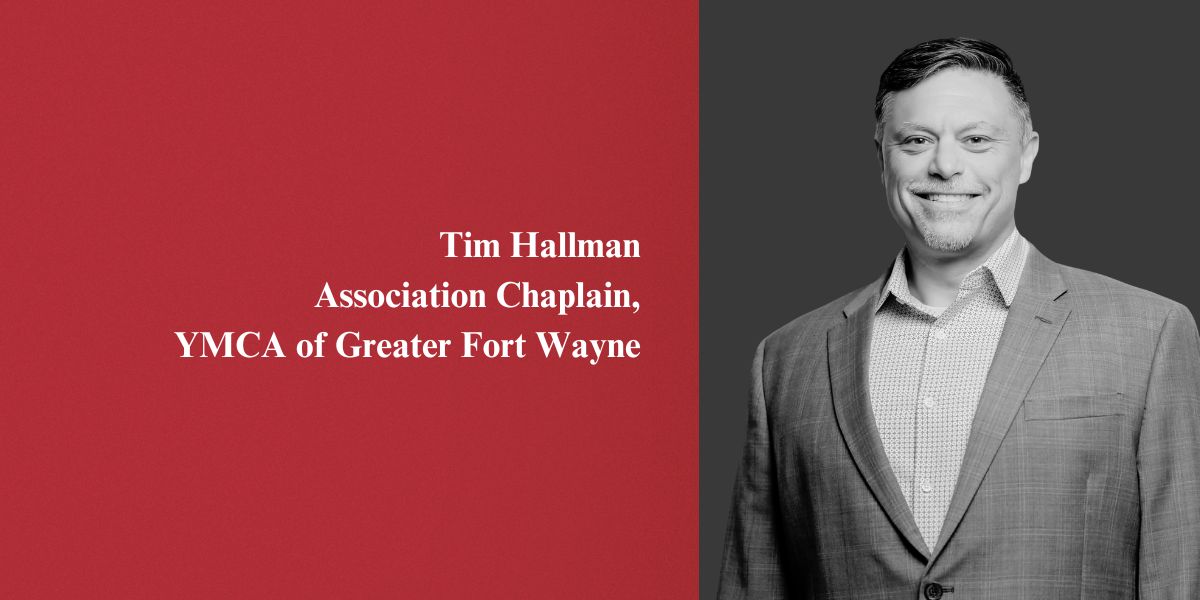
In a world often driven by ambition and achievement, Tim Hallman, the Association Chaplain at the YMCA of Greater Fort Wayne, offers a refreshing and profoundly transformational perspective on leadership. With a decade of experience in a role he helped pioneer, Hallman's journey illuminates how deep faith, intentional presence, and a commitment to love can redefine success in organizational leadership.
Hallman's path to chaplaincy was unique. A pastor for two decades, he brought a missionary mindset to the YMCA, an organization he initially knew little about. His early years were marked by observation and a deep trust that God was already at work. He saw his role as one of 'blessing or permission giving,' empowering staff and volunteers to live out their faith within the Y's mission. This approach fostered a culture where individuals felt seen, valued, and encouraged to integrate their spiritual lives with their professional endeavors.
His role evolved from 'Christian Emphasis Director' to 'Association Chaplain,' a shift that reflects a deeper commitment to practical chaplaincy. Drawing inspiration from the YMCA's historical roots in wartime chaplaincy, Hallman sees this expanded role as a response to contemporary challenges like the 'epidemic of loneliness.' He believes chaplaincy isn't just for clergy but for any person of faith who desires to live with purpose and be present to others.
Living Out Faith: A Daily Practice of Love
For Hallman, living out his faith in everyday leadership is an intentional, moment-by-moment practice. His mornings begin with scripture, prayer, and journaling – not as a rigid duty, but as a loving conversation with God. He views prayer as a form of loving others, bringing his family, friends, and colleagues to mind with simple blessings. This grounding prepares him to enter his day with an open heart, continually attuned to the Holy Spirit.
He describes his presence in meetings and conversations as an opportunity to love, rather than to manage an image or pursue ambition. This mindset allows him to contribute to discussions in a way that diffuses anxiety, offering a 'rightly timed word or a rightly phrased question' that guides conversations toward healthier outcomes. This subtle yet powerful approach to leadership is rooted in a profound self-awareness, nurtured by daily introspection. He constantly asks, 'How do I do what God wants?' and 'What's keeping me from loving people?'
Crucially, Hallman emphasizes showing up to work 'not afraid.' He recognizes that fear—of judgment, of failure, of not being enough—can cripple leaders. His antidote is a deep understanding of God's perfect love, which 'drives out fear.' This liberation allows him to engage authentically, fostering an environment where genuine connection and purpose can thrive.
Time, Talent, and Treasure: A Stewardship of Purpose
Hallman and his wife embody a disciplined approach to stewardship. Tithing, a practice instilled from childhood, is a non-negotiable foundation, with a commitment to give more each year. This generosity is not merely financial; it extends to their time and talent. Both see their professional roles—his wife as a public school teacher and Hallman at the YMCA—as their primary ministries. They pour their 'full selves' into their work, recognizing that their daily vocations are powerful avenues for serving God and others.
Advice for Christian Leaders: The Humility of Abiding Love
Hallman's most profound advice for Christian organizational leaders is a call to re-evaluate the very nature of ambition. He candidly shares his own struggle with allowing his calling to become an idol, leading to anxiety about whether he was 'making a big enough difference.' This relentless pursuit of achievement, he realized, can subtly displace the people and priorities that truly matter.
His encouragement is not to diminish the desire to do great things for God, but to constantly ask God, 'What is it that God actually desires for you to do?' The greatest work, he contends, is not what we think God wants, but what God actually wants. This often involves a journey of humility, where our failures and shortcomings become catalysts for deeper reliance on God.
He challenges leaders to embrace the 'slow, hidden work of really being loved by God.' This isn't a formula or a checklist, but an 'existential, spiritual reality' that transforms how we love and lead. Drawing on John 15, Hallman speaks of 'abiding' with God not just in quiet moments, but throughout the entire day—in meetings, in conversations, in the mundane. This constant attentiveness to God, he believes, is the heart of chaplaincy and the key to navigating the inevitable challenges and crises of leadership.
In a world desperate for authentic leadership, Tim Hallman's life and work offer a powerful testament: true transformation begins not with striving, but with abiding in love, allowing God to work through us, and in doing so, making the greatest difference of all.
Interview with
Tim Hallman
Association Chaplain at YMCA of Greater Fort Wayne
Winona Lake, IN
Continue Reading
More articles in Faith in Business
.jpg) Faith in Business
Faith in BusinessThe Three-Month Fix That Became a Three-Year Turnaround: Steven Flowers on Saving a Family Shelter
Steven Flowers walked into a shelter with less than two months of cash and a live bed bug taped to his door. Three years later, it is serving twice as many families. Here is how a pastor's phone call changed everything.

.jpg) Faith in Business
Faith in BusinessStay Off the Bench: How Kent Evans Is Equipping Dads to Make Disciples
Kent Evans started with a simple question in 2010: what if dads had tools to open Scripture with their sons? Sixteen years later, Manhood Journey reaches over a million people a year.
 Faith in Business
Mary Love-Harris Learned the Hard Way: Christian Doesn't Mean Poor
After years of underpricing her calling and absorbing church hurt, Mary Love-Harris heard God say something that changed everything: 'I never told you to do anything for free.'

WANT TO SHARE YOUR STORY?
Join our community of faith-driven leaders and share how God is working in your business.
Get Started