The Moral Compass That Guides Every Hire: Sarah Amoako's Journey from Marketing to HR Advocate
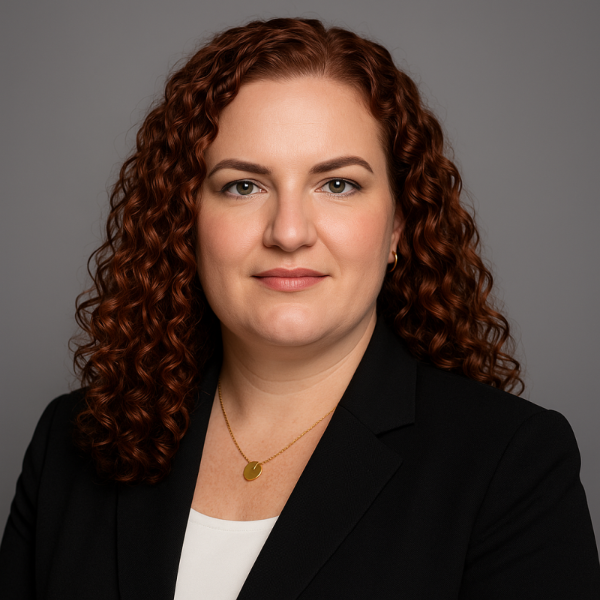
.jpg)
Listen to this article
Sarah sat across from her boss, heart pounding. For two months, she'd been wrestling with a policy that checked all the corporate boxes but violated something deeper—her moral compass. As Senior Human Resources professional, she knew the risk of speaking up. But staying silent felt worse.
"Look, I know I'm supposed to be doing this, but it's not feeling right to me," she finally said. Then she did what most professionals fear: she explained why, in detail, and proposed an alternative route—one that was "a little bit more honest."
Her boss listened. They tried it Sarah's way. It worked.
That moment crystallized something Sarah had been discovering throughout her thirteen-year HR career: faith isn't just a Sunday thing or a private belief system. It's the grid through which every professional decision gets filtered—if you're brave enough to let it be.
When the Foundation Becomes Your Own
Sarah grew up as a PK—a pastor's kid—immersed in church life, biblical teaching, and the expectation that faith would shape everything. But there's a difference between inherited belief and owned conviction.
"You don't really understand it and live it until you're able to step out of, 'OK, this is what I've been taught. It's a great foundation.' But now I need to experience life and really see where it fits in, where my faith grows," Sarah explains. "And this is truly, you know, it's truly God."
College brought that test. The workplace amplified it. Sarah started in marketing but felt something pulling her in a different direction—toward people, toward advocacy, toward being the person who steps in when someone needs help.
She prayed about it. "God, OK, where should I be in my path? Because I do love marketing, but I feel like it doesn't really give me the pathway to be an advocate for others and to be able to really help people. So that's what I really want my career to be in."
The answer came clearly: human resources. Not the compliance-heavy, policy-enforcing version of HR, but the kind that sees every employee as a whole person navigating real struggles.
Living Faith When You Can't Preach It
Working in HR means Sarah walks a delicate line. She can't evangelize in the workplace the way she might in ministry settings. But faith isn't something she can—or would—hide.
People will see the light themselves. So in my two worlds, my personal life and my professional life, that's pretty much how I walk in my faith. I never deny being not knowing God. That's a no, no for me.
Instead of preaching, Sarah leads with questions: "Are you comfortable with this conversation? Are you Christian? Because if I'm offending you in any way, we can stop right here." Then she shares her story—the struggles she's faced, the wisdom she's gained, the way faith shaped her response.
She's discovered one of her strongest gifts is discernment. "I can sense stuff from the middle. I can see stuff that's already about to happen," she says. When God prompts her to speak, she does—not as a "Jesus freak," but as a colleague who genuinely cares.
That discernment shapes everything, including hiring. Sarah recalls evaluating a candidate who checked every box on paper. "They crossed all the T's and dotted all the I's, but something was not right." She dug deeper, had honest conversations with the hiring manager, and they decided to keep looking.
It's a small example, but it illustrates a larger truth: faith doesn't just inform the big, dramatic decisions. It shapes the daily ones—who to hire, what route to take, when to speak up.
The Discernment You Can't Ignore
Sarah's favorite verse is Proverbs 3:5-6: "Trust in the Lord with all your heart and lean not to your own understanding. In all your ways acknowledge Him, and He shall direct your paths."
She lives that verse in real time. "I don't make a decision unless it feels right. And if it doesn't feel right, I got to pray about it. Even if it's a quick prayer right then and there in my head when nobody knows what I'm doing, I will do it."
That's not indecision or spiritual posturing. It's the recognition that every step has consequences—for the people she serves, the culture she shapes, the integrity she either protects or compromises.
At the end of the day, is it really worth it? Whatever career you're in, you want to be able to go to sleep and go to sleep peacefully at night. You don't want to have it at the back of your head saying, 'Well, I should have done it this way or this wasn't the right thing to do.'
That's the question Sarah wants every Christian business leader to ask: Will this decision let me sleep with a clear conscience? Because the promotions, the accolades, the quarterly wins—none of it matters if you've sacrificed your moral compass to get there.
The Advice She Gives Her Kids—and Herself
Sarah teaches her children the same thing her faith journey taught her: foundation matters, but real faith is tested in real life. "We're teaching you the foundation. This is what you're learning in church. But when you get into those real life situations, this is where you're going to really see how God moves."
Her counsel to them—and to every professional navigating the tension between faith and work—is simple: "Whatever you do, don't ever be afraid. And if you don't understand, seek wisdom."
That's the Monday morning takeaway. When you face a decision that doesn't sit right, don't rationalize it away. Pause. Pray—even if it's a silent, thirty-second prayer at your desk. Seek wisdom from mentors, from Scripture, from the Holy Spirit's prompting. Then have the courage to say, "This doesn't feel right to me. Here's why. And here's another way."
You might be surprised how often people listen when you lead with conviction and offer a better path.
Faith That Takes Up Everything
When asked how her faith shapes where she invests her time, talent, and resources, Sarah's answer is unequivocal: "My faith takes up everything."
Not in a way that's showy or performative, but in a way that's integrated so deeply it can't be separated. Her work in HR isn't a secular job with a spiritual side hustle. It's ministry—the kind that happens in cubicles and conference rooms, in hiring decisions and difficult conversations.
Sarah's journey from marketing to HR wasn't just a career pivot. It was a calling answered. And every day, she's learning what it means to trust God not just with the big, dramatic leaps, but with the small, daily choices that shape a life—and a legacy.
So here's the question for you: Are you leading with the moral compass God gave you, or the one your industry handed you? Because the stakes are higher than your next promotion. You're building a reputation—and a life—that either honors your faith or compromises it, one decision at a time.
Choose the path that lets you sleep at night. Choose the one that, years from now, you'll be proud to tell your kids about. Choose the one where God directs your steps—even when it's the harder route.
That's the kind of faith that doesn't just survive the workplace. It transforms it.
Continue Reading
More articles in Faith in Business
.jpg) Faith in Business
Faith in BusinessThe Three-Month Fix That Became a Three-Year Turnaround: Steven Flowers on Saving a Family Shelter
Steven Flowers walked into a shelter with less than two months of cash and a live bed bug taped to his door. Three years later, it is serving twice as many families. Here is how a pastor's phone call changed everything.

.jpg) Faith in Business
Faith in BusinessStay Off the Bench: How Kent Evans Is Equipping Dads to Make Disciples
Kent Evans started with a simple question in 2010: what if dads had tools to open Scripture with their sons? Sixteen years later, Manhood Journey reaches over a million people a year.
 Faith in Business
Mary Love-Harris Learned the Hard Way: Christian Doesn't Mean Poor
After years of underpricing her calling and absorbing church hurt, Mary Love-Harris heard God say something that changed everything: 'I never told you to do anything for free.'

WANT TO SHARE YOUR STORY?
Join our community of faith-driven leaders and share how God is working in your business.
Get Started