Leading with a Steward's Heart: How Faith Transforms Business Decisions
Listen to this article
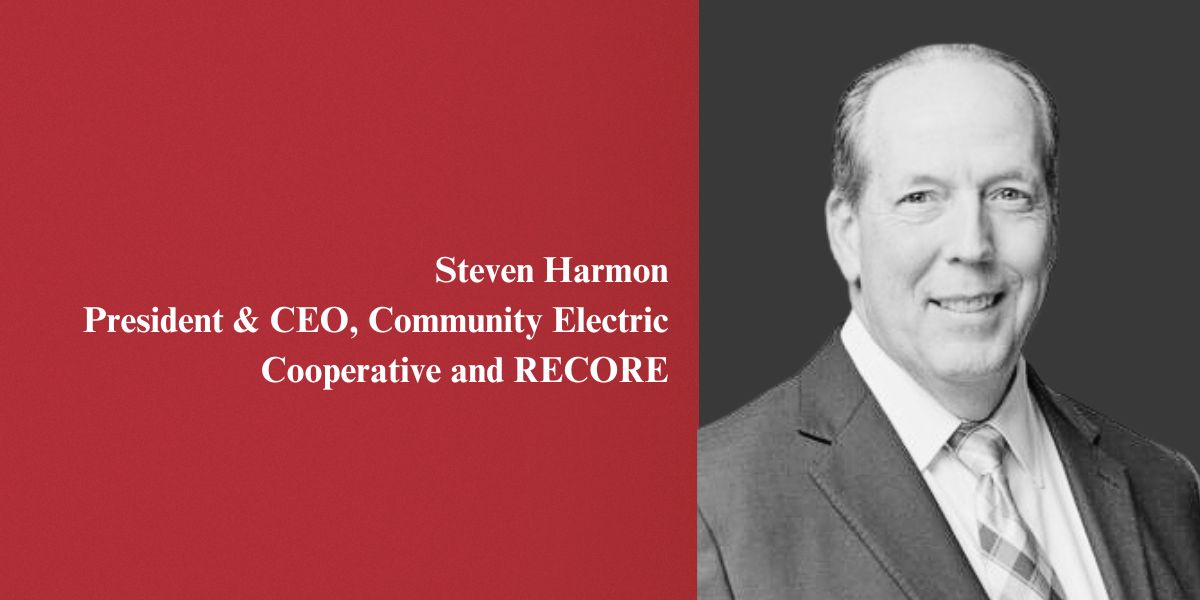
In a world often driven by profit and expediency, Steven Harmon, CEO of Community Electric Cooperative, offers a refreshing and powerful perspective on leadership. For Harmon, faith isn't a separate compartment of life; it's the very foundation upon which every decision, every interaction, and every strategic move is built. His journey from hands-on work to executive leadership is a testament to perseverance, but it's his unwavering commitment to faith-driven stewardship that truly defines his impact.
The Unseen Hand: Integrating Faith into Daily Operations
Harmon's leadership philosophy is deeply rooted in the belief that faith is central to how he approaches people, decisions, service, and stewardship. At CEC/RECORE, this isn't just a personal conviction; it shapes the very culture of the organization. A practical example? Every meeting begins in prayer. This isn't a mere formality, but a deliberate act that sets the tone, grounding leaders and reminding them that their work impacts lives and communities. It’s a constant acknowledgment that true wisdom comes from a higher source.
This integration goes far beyond prayer. Harmon emphasizes that faith becomes visible in the way CEC/RECORE treats its employees, makes difficult decisions, and prioritizes service. It’s about living out beliefs in the substance of their work, not just in a moment of reflection.
Investing in People: Cultivating Purpose and Unity
Harmon's commitment to stewardship extends profoundly to his team. He runs a year-long program designed to help every employee understand the full mission of the organization, not just their isolated role. This significant investment aims to foster a deeper sense of purpose, awareness, and unity. By understanding how their individual contributions connect to the larger cooperative, employees work with greater intentionality and effectiveness.
This deliberate development is crucial, Harmon believes, because strong culture and alignment aren't accidental. They are built through intentional investment in understanding and growth. When people grasp the mission, operations, values, and service model, they are empowered to carry those forward with conviction.
The Right Decision Over the Easy Decision: Faith in Action
Perhaps one of the most striking aspects of Harmon's leadership is his approach to difficult business decisions. For him, faith is the base of every choice, even when it means choosing what is right over what is easiest, most profitable, or most convenient. He recounts situations where CEC/RECORE chose to incur a short-term financial loss on a vendor arrangement because it aligned with their values and commitment to doing the right thing.
This challenges the common assumption that faith and business values must be separate. Harmon argues that when faith is authentic, it should shape every aspect of operation – how money is handled, partners are chosen, employees are treated, customers are served, and how conflicts between the easy and the right path are resolved.
Service as the Core Mission: Beyond Status to Responsibility
Service isn't a side function at CEC/RECORE; it's the mission. Harmon sees service as deeply connected to faith, embodying stewardship, responsibility, humility, and care for others. Keeping service at the center helps to eliminate ego, reminding leaders that their role is about responsibility, not status. They are stewards, entrusted with people, resources, opportunities, and influence, and are accountable for how they utilize these gifts.
This stewardship mindset influences every investment – time, talent, and resources. Harmon intentionally invests in people, team building, customer service, and organizational health, all with the goal of producing integrity, trust, and character in their work.
A Transformative Impact: When Faith is Authentic
Harmon has witnessed firsthand the transformative impact of a faith-centered approach. People notice when an organization operates differently – when leaders are guided by conviction, when culture is rooted in something deeper, and when service is more than a slogan. This authenticity has even drawn individuals towards faith, seeing it lived out consistently in how people are treated and values are honored.
For leaders contemplating how to integrate their faith into a business setting, Harmon offers clear advice: start with conduct. Let integrity, humility, service, fairness, and compassion be evident before words are spoken. Consistency, he emphasizes, matters more than pronouncements. Then, don't be afraid to genuinely center your leadership on faith, allowing it to shape culture, decisions, stewardship, and priorities without being performative.
Leading Faithfully: A Call to Stewardship
Steven Harmon's leadership philosophy is a powerful reminder that faith and leadership are not separate callings, but deeply intertwined. For him, leadership, service, and stewardship are all expressions of his faith. His ultimate goal isn't just to lead effectively, but to lead faithfully, honoring God and serving others well. This approach creates clarity, consistency, and a profound sense of purpose that transforms not only the organization but also the lives it touches.
Written by
Kingdom Factor
Faith-driven executive coaching and peer advisory groups.
Interview with
Steven Harmon
President & CEO at Community Electric Cooperative and RECORE
Lambertville, MI
Continue Reading
More articles in Faith in Business
.jpg) Faith in Business
Faith in BusinessThe Three-Month Fix That Became a Three-Year Turnaround: Steven Flowers on Saving a Family Shelter
Steven Flowers walked into a shelter with less than two months of cash and a live bed bug taped to his door. Three years later, it is serving twice as many families. Here is how a pastor's phone call changed everything.

.jpg) Faith in Business
Faith in BusinessStay Off the Bench: How Kent Evans Is Equipping Dads to Make Disciples
Kent Evans started with a simple question in 2010: what if dads had tools to open Scripture with their sons? Sixteen years later, Manhood Journey reaches over a million people a year.
 Faith in Business
Mary Love-Harris Learned the Hard Way: Christian Doesn't Mean Poor
After years of underpricing her calling and absorbing church hurt, Mary Love-Harris heard God say something that changed everything: 'I never told you to do anything for free.'

WANT TO SHARE YOUR STORY?
Join our community of faith-driven leaders and share how God is working in your business.
Get Started