From Radar Systems to AI Agile: How Mark Fairbanks Is Building Kingdom Teams for the Technology Revolution
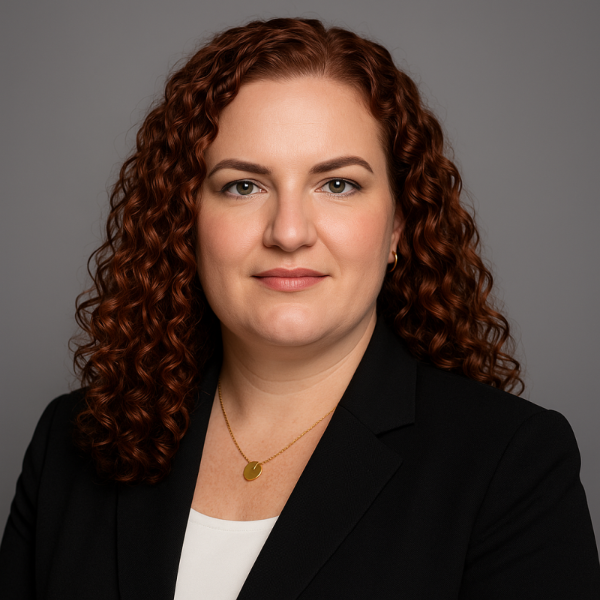
.jpg)
Listen to this article
Mark Fairbanks walked into a Mel Gibson film with popcorn and a Coke. He never touched either one.
"I put it down," he recalls. "I was just so drawn in by the Spirit." That moment — sitting in a darkened theater, undone by story and by grace — captures something essential about who Mark is: a man who has spent his career at the intersection of high-stakes technology and deep, authentic faith, and who refuses to let either one exist without the other.
Today, Mark leads an AI Agile Transformation Consultancy north of Seattle, helping organizations build self-managing, servant-led teams that are prepared to thrive in the age of artificial intelligence. But the road that brought him here winds through radar engineering, Edwards Air Force Base flight testing, early e-commerce breakthroughs at Xerox, and two decades of coaching teams inside some of the largest financial institutions in the world.
Built to Build
Mark's career began in electronics. Working alongside brilliant engineers at Hughes Aircraft and later at Edwards Air Force Base, he absorbed a systems-thinking mindset — the understanding that complex, world-class outcomes are not the product of lone genius, but of well-designed teams working in disciplined coordination.
"That's how you build a radar," he says simply. "That's how you build a space shuttle. You build it in systems."
That insight never left him. It followed him into e-commerce at Xerox, where he led a team that grew revenue from $50,000 per month to $2.6 million within a single year — earning him a spot at the prestigious Xerox Presidents Club. It followed him to New York City, where as a consultant with TCS he spent years building hundreds of Agile teams inside Morgan Stanley, JPMorgan Chase, Thomson Reuters, and Sony Pictures. And it followed him into the classroom, where he has taught university-level business and technology courses for more than two decades, first at the University of Phoenix and now at the University of Arizona.
Through all of it, a single framework kept proving itself: Agile. Originally developed in software engineering, Agile organizes work into short, focused sprints, empowers teams to manage their own processes, and builds in regular cycles of testing, learning, and improvement. Mark has spent twenty years refining it, adding design thinking at the front end and AI integration throughout, to create what he now calls Full Stack Team Synergy.
The Leadership Model Hidden in Plain Sight
Here is where Mark's faith and his methodology become inseparable.
"The team becomes the manager," he explains. "They are self-managed. And as the owner, the leader, the visionary — you are a servant leader. Just like Christ was."
"Christ was a servant leader. If we look at what He did with His disciples, that's the whole framework. You leverage your vision, you build a team you can trust, and you give them the freedom to create and innovate and do the things God designed them to do."
This is not a metaphor for Mark — it is the architecture. When he steps into a company to implement Agile transformation, he is not simply rearranging org charts. He is calling leaders to a posture of humility and trust that most corporate cultures actively resist. The visionary casts direction; the team builds the path. Leaders stop micromanaging and start multiplying.
He points to Elon Musk's small-team model at SpaceX as a real-world example of what this can produce — rockets caught mid-air by mechanical chopsticks, achieved through lean, empowered teams moving at extraordinary speed. His one caveat: you cannot sustain that by simply pushing harder. "You have to give people time to think," Mark says. "Longevity comes from that. Burnout is not a strategy."
AI: Tool, Not Threat
When the consulting firm Mark worked for announced layoffs and cited AI as the cause, something clarified for him rather than collapsing.
"I had to ask myself: what value can I actually bring to this world with AI? Because it is a great tool — but it has to be used correctly."
Mark is neither a cheerleader nor a critic of artificial intelligence. He is a practitioner who has watched hype cycles rise and crash before — he was in e-commerce when the dot-com bubble burst, watching Sun Microsystems, one of his clients, fold almost overnight. He has seen what happens when technology gets ahead of wisdom.
"God gave us the ability to create and innovate and do all that fun stuff we love to do. AI can help us do it faster. But don't let it do it for you. The creation is still yours."
His Regulated Product Operating System framework is designed specifically for this moment: helping organizations in regulated industries — finance, healthcare, manufacturing — use AI to customize complex enterprise systems around their actual workflows, rather than bending their people to fit a software vendor's assumptions. The goal is not efficiency for its own sake. It is giving teams the tools to do their best work, faster, without surrendering their judgment to an algorithm.
He also carries a sharper concern about where AI could lead if the people of faith disengage. Universal basic income tied to behavioral compliance, robots displacing entire workforces, human creativity outsourced to machines — Mark sees these not as inevitable progress but as choices that communities of faith have both the right and the responsibility to resist.
"God put us here to work. Adam had a job on day one — he named every animal. We are made for purposeful work. The message that jobs are simply going away is something I see as deeply harmful, and Christians should be among the loudest voices pushing back on it."
The Toasters Club and the Longer Vision
To understand where Mark's vision is ultimately headed, you have to meet the Toasters Club.
It started as a bedtime story for his daughter — a tale of high school students in the fictional coastal town of Beachside Park, California, who got tired of just talking about problems and decided to actually solve them. They built a website for a struggling pet rescue center. They designed a streaming media system for their school's football games. They formed a team, learned Agile, and started building products. Then a rogue robotics scientist named Dr. Ott began replacing teachers and townspeople with hyper-realistic robots, and the students had to use every skill they had developed — technical, relational, and moral — to save their community.
Mark published the book. But his real goal is the film.
"I believe the movie is going to be better than the book in this case," he says with a grin. For Mark, media is not separate from mission — it is one of the seven cultural mountains he believes followers of Christ are called to influence: faith, family, education, government, media, arts, and business. He watched what Mel Gibson's The Passion of the Christ did in a single weekend in a single theater. He has seen what Angel Studios is doing. He knows what story, wielded with conviction, can accomplish.
Base Camp Before the Climb
Mark has a phrase for the early work of transformation: base camp empowerment. Before you can climb the mountain, you have to sit at base camp, get your bearings, build the team, light the bonfire.
That image applies equally to the organizations he consults, the students he teaches, the small groups he envisions using Agile frameworks to serve their communities, and his own ongoing climb. He keeps a scrum board in his garage. He taught his daughter to use one for her homework. He runs his personal backlog the same way he runs a product sprint.
His consulting work is still bootstrapped. The partnerships are still being forged. The movie is still a vision on the board. But Mark Fairbanks has spent a career building things that looked impossible — radars, e-commerce empires, self-managing teams inside Wall Street's most complex institutions — and he has learned to trust both the framework and the One who designed him to build.
"Whether they are a believer or not, everybody is given this purpose, and it is driving them — they just don't know where it's from. We have this opportunity right now to share Christ through our business. I'm not going to miss that."
He is not missing it. One sprint at a time, one team at a time, one story at a time — Mark Fairbanks is building for the kingdom at the place where technology, leadership, and faith converge.
Continue Reading
More articles in Faith in Business
.jpg) Faith in Business
Faith in BusinessThe Fan Blade That Changed Everything: Byron Low on Loving People Without a Drum to Beat
A curious engineer on his lunch hour became an executive coach. Byron Low explains why he follows God's nudges, loves people first, and refuses to trust in chariots.

.jpg) Faith in Business
Faith in BusinessThe Three-Month Fix That Became a Three-Year Turnaround: Steven Flowers on Saving a Family Shelter
Steven Flowers walked into a shelter with less than two months of cash and a live bed bug taped to his door. Three years later, it is serving twice as many families. Here is how a pastor's phone call changed everything.

.jpg) Faith in Business
Faith in BusinessStay Off the Bench: How Kent Evans Is Equipping Dads to Make Disciples
Kent Evans started with a simple question in 2010: what if dads had tools to open Scripture with their sons? Sixteen years later, Manhood Journey reaches over a million people a year.
WANT TO SHARE YOUR STORY?
Join our community of faith-driven leaders and share how God is working in your business.
Get Started