From 'No' to 'Next': How Keith Thomas Built a Leadership Framework That Refuses to Leave Faith Behind
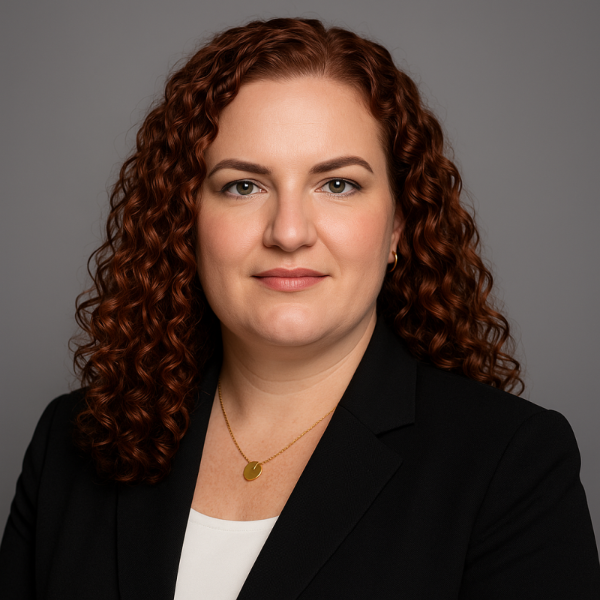
.jpg)
Listen to this article
It was a moment most high-performing leaders dread: the interview you were sure you'd win, the promotion you'd worked years toward — and then a quiet, deflating no.
For Keith Thomas, that rejection could have become a footnote in a story about bitterness. Instead, it became the turning point that launched a second chapter none of his colleagues saw coming. It also surfaced a question that has since shaped everything he does as an executive coach, author, and leadership developer: What are you doing to develop you?
"I was having one of those pity parties," Keith admits. "Thinking, what are they doing to develop me? Then the mirror said, what are you doing to develop you? I know that was the Spirit speaking to me."
That inner reckoning led Keith — then 50 years old — back to school. He earned a bachelor's degree, liked it so much he kept going, and finished a Master of Education (M.Ed.) in Organizational Leadership and Communications from Belmont University in Nashville. A 4.0 GPA, both times.
"Taking that no turned into something that became next. Then, as I was finishing up, I got another word: more."
That single syllable — more — carried him from Nashville to the Dallas area, from sales leadership into marketing, and eventually into the work he now believes he was always being prepared for.
A Framework Born From Real Life
Keith Thomas has spent more than 30 years in the construction industry, the last 20 of those with Hilti, where he serves as Senior Manager, MEP Trades – Central U.S. He is also the founder of Balanced Priorities, a leadership development company built around the five areas he first wrote about in 2015: spiritual health, physical health, emotional intelligence, mental strength, and financial health.
His book, Balanced Priorities: The 5 Pillars of Life, published in December 2025, is the framework he now uses in his coaching. He'll be quick to tell you it isn't a get-rich theory. It's a map drawn from decades of living — lessons earned through corporate setbacks, church leadership, marriage, and the kind of slow growth that only comes from staying in the room long enough to see what God is doing.
"I have lived long enough to experience some things," he says. "And a lot of those have been struggles."
Keith's faith didn't come easy or early. He grew up attending church with his mother, but when his teenage years arrived, he decided he didn't need it. His dad didn't go, so neither did he. College came and went, then marriage, and Keith carried with him what he now describes as a comfortable but hollow assumption.
"I thought America was a Christian nation, so by default I was a Christian."
It took a persistent brother-in-law — calling every week, sometimes twice — to get Keith and his wife Diane through the doors of a church. He went, he admits, mostly to make the phone stop ringing. But something shifted. Over the course of about a year, surrounded by people their own age wrestling with the same questions, Keith heard a pastor preach a sermon about eternity. That was the moment it became real.
"That was where it settled in on me that I needed to make a change. That is when I accepted Christ."
Thrown Into the Deep End — on Purpose
What happened next is a pattern that would repeat throughout Keith's life: he was handed responsibility before he felt ready, and he grew because of it.
Shortly after coming to faith, he was asked to teach an adult Sunday school class. His biblical knowledge at the time, by his own laughing admission, extended roughly from Noah's Ark to Jonah. He spent eight to ten hours a week preparing a 30-to-45-minute lesson. Week after week, year after year.
"I probably could have gotten a master's degree in biblical studies for all I have studied over the years."
He went on to serve as deacon, elder, trustee, and small group leader across churches in Illinois, Tennessee, and Texas. A pastor he served under as an elder introduced him to the leadership philosophy of John Maxwell and drove home a principle that Keith carries with him still: everything rises and falls on leadership.
"He taught us that we are either leading to lift or we are leading in a way that causes people to fail. We need to guard that closely."
That conviction now sits at the center of Keith's professional work. He recently completed John Maxwell's leadership certification and has begun building out a leadership cohort — a handpicked, eight-week intensive focused on priorities, groundedness, and what Keith calls drift: the slow, almost imperceptible way that high-performers lose their footing when life speeds up.
Success Without Significance Is an Empty Equation
If you spend any time on Keith's LinkedIn feed, you'll notice something. His most technical posts get polite engagement. But when he writes about spiritual grounding, the response is different — deeper, more personal, more urgent.
"I can post something about the physical side, and everybody is doing some kind of physical fitness," he observes. "But spiritual grounding resonates. It is bundled in with the whole of who we are."
It's a signal he takes seriously, because it mirrors what he hears in the leaders he coaches: a quiet hunger for something that performance metrics can't satisfy.
"Success and significance are not the same thing. We can have success without significance, but we need to have purpose built into why we are having success. What is the legacy you are going to leave behind? It is more than what is in your bank account."
Keith lives this out through what he calls his three-part life purpose statement: impact, influence, and generous living. Impact is personal — the one-on-one. Influence extends to the organizations he's part of: his church, his company, his community. Generous living is about far more than finances. It's about how much of himself he gives away.
He and Diane — married 40 years and counting — talk about this together regularly. "In that marriage relationship, there is a me, there is a her, and there is an us," he says. "We recognize that and how it relates to the spiritual aspect of things as well."
The Pillar That Keeps Rising to the Top
Even as Keith works to strengthen all five pillars — spiritual, physical, emotional, mental, and financial — one has grown increasingly central to everything else. A foot surgery more than a month before our conversation had already shown him how quickly the physical can reorder the emotional and the mental. But what keeps surfacing in his coaching, his writing, and his cohort conversations is the spiritual.
"Stay grounded spiritually and do not let there be drift," he says simply. "Even when things speed up."
It is, at its core, the lesson the mirror taught him all those years ago. Growth doesn't happen to you. You have to pursue it — intentionally, patiently, and with a willingness to let a no become a next.
For leaders who are tired of chasing numbers that never seem to be enough, Keith Thomas offers a different metric: not what you've accumulated, but what you've stewarded. Not just what you've achieved, but who you've become — and who you've helped along the way.
Keith Thomas's book, Balanced Priorities: The 5 Pillars of Life, is available on Amazon. Learn more about his coaching and upcoming leadership cohort at Balanced Priorities.
Continue Reading
More articles in Faith in Business
.jpg) Faith in Business
Faith in BusinessThe Fan Blade That Changed Everything: Byron Low on Loving People Without a Drum to Beat
A curious engineer on his lunch hour became an executive coach. Byron Low explains why he follows God's nudges, loves people first, and refuses to trust in chariots.

.jpg) Faith in Business
Faith in BusinessThe Three-Month Fix That Became a Three-Year Turnaround: Steven Flowers on Saving a Family Shelter
Steven Flowers walked into a shelter with less than two months of cash and a live bed bug taped to his door. Three years later, it is serving twice as many families. Here is how a pastor's phone call changed everything.

.jpg) Faith in Business
Faith in BusinessStay Off the Bench: How Kent Evans Is Equipping Dads to Make Disciples
Kent Evans started with a simple question in 2010: what if dads had tools to open Scripture with their sons? Sixteen years later, Manhood Journey reaches over a million people a year.
WANT TO SHARE YOUR STORY?
Join our community of faith-driven leaders and share how God is working in your business.
Get Started