From Darkness to Dawn: How Amanda Gutierrez Found Her Calling in the Hardest Places
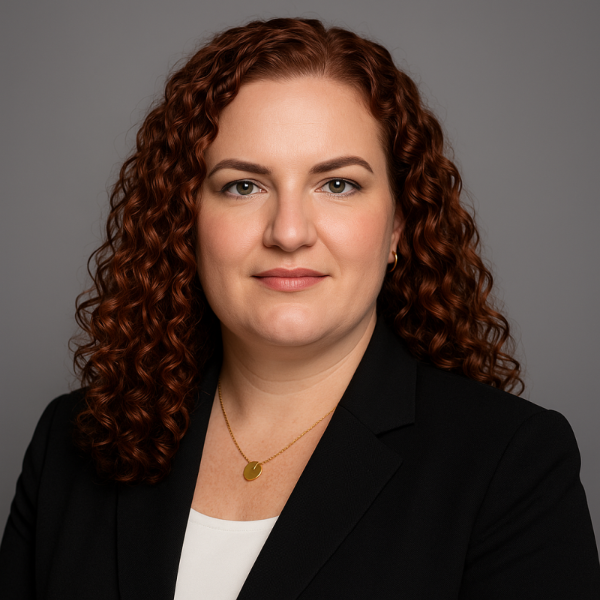
.jpg)
Listen to this article
Amanda Gutierrez saw nothing but pitch black. At 27, alone in her Fort Lauderdale bedroom, suicidal thoughts consumed her. Friends had abandoned her. Her identity had collapsed. She couldn't see a way forward—only an end.
Then a pinpoint of light pierced the darkness.
"I didn't know what it was," Amanda recalls. "But I knew it was supernatural because I could not see anything—it was pitch black. And then I saw that light."
Seconds later, her mother walked into the room. Life or death hung in the balance. Amanda dropped to her knees, head to the floor, and cried out: "Jesus, I need you. I don't know what else to do. I don't know who to go to, but I just need you right now."
That moment three years ago became the turning point in a journey that began in church pews at age five, detoured through fifteen years of darkness, and now positions Amanda as a healthcare leader who advocates for the hurting while guiding others toward spiritual freedom.
When Foundation Crumbles
Amanda grew up with a solid church foundation. Her father served as a medic in the military, then became a nurse, and was pursuing his dream of firefighting when cancer cut his life short. Healthcare ran in her family's veins.
But middle school brought trauma that shattered everything. At twelve, hanging with older crowds she thought were cool, Amanda experienced abuse that she kept hidden for a year. When the secret finally emerged, she was already acting out—fighting at school, getting suspended, drinking by thirteen, partying with college students while still a young teen.
"As a young person navigating this traumatic event and not knowing how to get through it, I was just sort of acting out," Amanda explains. Her mother had no idea. At home, Amanda retreated to her room in silence. Outside, she was a different person entirely.
Depression, anxiety, and loss of identity became her constant companions. She lost her way from Christ for fifteen years, making friends her idols. When friendships fractured, so did she.
The Breaking Point That Became a Breakthrough
Three years ago, friends dropped "like flies" from Amanda's life. Each loss drove her deeper into despair. She'd always coped by isolating, drinking, numbing the pain. This time felt different—final.
Then came the light. Her mother's interruption. And that desperate prayer.
One week later, a friend invited her to an Elevation Worship concert. Amanda went, not knowing what to expect. "I had a divine encounter at the concert," she says. "My friend was chilling, but I was a mess. I said, 'This is the moment.' And ever since that concert, I just said there is no going back."
She bounced between churches for a year and a half, searching for home. When she found it, everything accelerated. Two months after joining, she enrolled in a course called Freedom—a program designed to uproot unforgiveness, bitterness, and hidden wounds that keep believers from walking in the freedom Christ already purchased.
"I literally just took things out of my heart that I was holding on to for so long," Amanda recalls. "The unforgiveness, the rejection, all these things."
Her own psychologist—the one who'd counseled her since age twelve—noticed the transformation. "What I did for you in twelve years," the retired therapist told her, "the Lord has done for you in two."
Leading from the Scars
Today, Amanda serves as an Oncology Operations Coordinator at Baptist Hospital in Miami, one of South Florida's largest healthcare systems. She oversees operations across multiple locations serving roughly 400 patients daily. She's also completing her master's degree in leadership and human resources this August.
But her clinical background gives her a perspective many administrators lack. She started hands-on with patients, building relationships, witnessing suffering up close. When she failed out of nursing school a month before graduation—after two years of not working and draining her savings—she thought it was the end.
Instead, God was redirecting her into leadership, where she now advocates for nurses facing the challenges she once knew firsthand. "I see how much nursing has changed," Amanda says. "Now I'm the advocate for my nurses. I'm on the other side of the field."
Working in oncology means daily confrontation with suffering, death, and the brutal costs of care. "These people are literally trying to survive, and now they have the extra burden of what the cost is," she notes. "I see myself praying outside of work: 'Lord, give these patients peace and comfort, because it's a lot.'"
She prays for her clinical staff too—caught between compassionate care and organizational demands that prioritize numbers over people. "Higher-ups are just trying to meet numbers, so they totally bypass the more compassionate part of things when it comes to healthcare. That part can be very frustrating sometimes."
When Grief Meets Grace
Last year tested everything Amanda had learned about faith. In a single month, five people died—including her aunt and a close friend who was "like a second mom." Another friend died in a car accident. Then both her dogs died a week apart.
"It was week after week after week after week," she recalls.
The old Amanda would have isolated, numbed herself with alcohol, avoided the pain. This time, she couldn't escape—not because she was trapped, but because her church community wouldn't let her.
"I couldn't even want to be isolated because I had people checking on me daily. I had people showing up with condolence gifts. I never had that before. I'm not used to people showing up the way they were showing up."
I was grieving, but I felt so much peace at the same time. God is so good because He knew these seasons were coming, but He put me with the right people to help me overcome them.
When her uncle died last week, the same community surrounded her again. The constant overflow of love from pastors, prayer teams, and fellow believers created space to grieve without drowning.
Freedom Work: Planting Seeds in Hard Soil
For the past year, Amanda has led Freedom groups at her church—the same course that helped her confront buried trauma and walk into genuine freedom. Three semesters in, she's learned that leading in church demands a different kind of patience than leading at work.
"If there's an issue with somebody at work, okay, I'm blocking you. That's it. No—in church, we have to work through it. We have to forgive. We have to do these things that He says."
She thought she was humble and patient before. Church leadership exposed how much further she had to go. "That humility and patience that I've had to learn this past year—I get it now. It's rough."
Spiritual warfare comes with the territory. So does the reward of watching others experience the same freedom she found. "I'm just a seed planter," Amanda says, "but at least I'm able to be that guide and vessel that God's using to help others get through their situation."
Running From Victory, Not Toward It
Amanda still faces rejection regularly. She's thirty, competing for management positions against candidates with ten-plus years more experience. Applications pile up. "No" becomes familiar.
"I've been getting so many no's lately, but I'm not taking that as discouragement. Maybe it was just a no because You don't want me in that environment. I said, let me just be patient and trust You."
She keeps one reminder constantly before her—Luke 9:23, about picking up your cross daily. She's learned that believers don't run toward victory; they run from it. The battle is already won.
We're not running to victory—we're running from victory. This battle's already won. Just put on the armor of God and you are good.
Her daily rhythm now revolves around the Word—reading it, meditating on verses for specific seasons, listening to sermons and worship music constantly. When she slides into a low place, she rehearses God's goodness, mercy, and grace. She memorizes Scripture as her offensive weapon against life's challenges.
Her brother noticed the change recently. "You're becoming more like Mom every single day," he said—their mother being a longtime believer deeply involved in church.
Amanda corrected him: "No, I'm becoming more like Jesus every single day."
She laughed, remembering how she used to question her mom's commitment. "I'm like, Mom, you're at church four days a week. What is going on? That's so much." Now Amanda is the one at church four days a week, hungry for more, unable to get enough.
Her psychologist was right: what took twelve years of counseling to barely manage, Jesus accomplished in two years and transformed completely. Psychology has its place, but some battles are fundamentally spiritual.
The Long View
Amanda doesn't know exactly what's next. She keeps applying for positions, trusting God's timing, holding loosely to outcomes while gripping tightly to faith. She's grateful for every trauma, every dark season, every loss—because without them, she wouldn't be who she is today.
She wouldn't know what it means to be a new creation. She wouldn't understand the power of godly community. She wouldn't be equipped to lead others out of the darkness she once inhabited.
"I wouldn't be the strong woman of the Word that I am right now without that," Amanda reflects. "Really studying it, really applying it, really making sure that my life is focused on what the Word says and knowing what God's will is."
Every single day, she sees evidence of God's goodness—even when everything breaks loose. The tangible presence of the Holy Spirit has become her normal. That's what keeps her talking to people about Jesus, hungry to make disciples, eager to see others experience what she's found.
"It took me two years, two and a half years to get to where I'm at right now," she says. "It's all a process. But if you just hold on and don't give up—the holding on can be hard, but the minute you say yes to God, you don't know what you're saying yes to. It's a battle we've already won. We just have to stand firm."
The light that pierced Amanda's darkness three years ago didn't just save her life. It ignited a calling—to lead with compassion in a healthcare system that often forgets it, to guide hurting people toward the freedom she discovered, and to live every day as proof that God's redemption writes the best comeback stories.
What cross are you being called to pick up today? What darkness needs the light only Christ can bring? Your past doesn't disqualify you—it equips you for the freedom work God has waiting.
Continue Reading
More articles in Faith in Business
.jpg) Faith in Business
Faith in BusinessStay Off the Bench: How Kent Evans Is Equipping Dads to Make Disciples
Kent Evans started with a simple question in 2010: what if dads had tools to open Scripture with their sons? Sixteen years later, Manhood Journey reaches over a million people a year.

 Faith in Business
Mary Love-Harris Learned the Hard Way: Christian Doesn't Mean Poor
After years of underpricing her calling and absorbing church hurt, Mary Love-Harris heard God say something that changed everything: 'I never told you to do anything for free.'

 Faith in Business
The Many 'With' the Questions: Tom Johnston on Faith, Recovery, and Leading 'Without' the Answers
Tom Johnston hit bottom before he ever built Talent Optimizer Group. His recovery taught him a leadership lesson most founders never learn: the most important relationship in your business is the one with the person sitting across from you.
.jpg)
WANT TO SHARE YOUR STORY?
Join our community of faith-driven leaders and share how God is working in your business.
Get Started