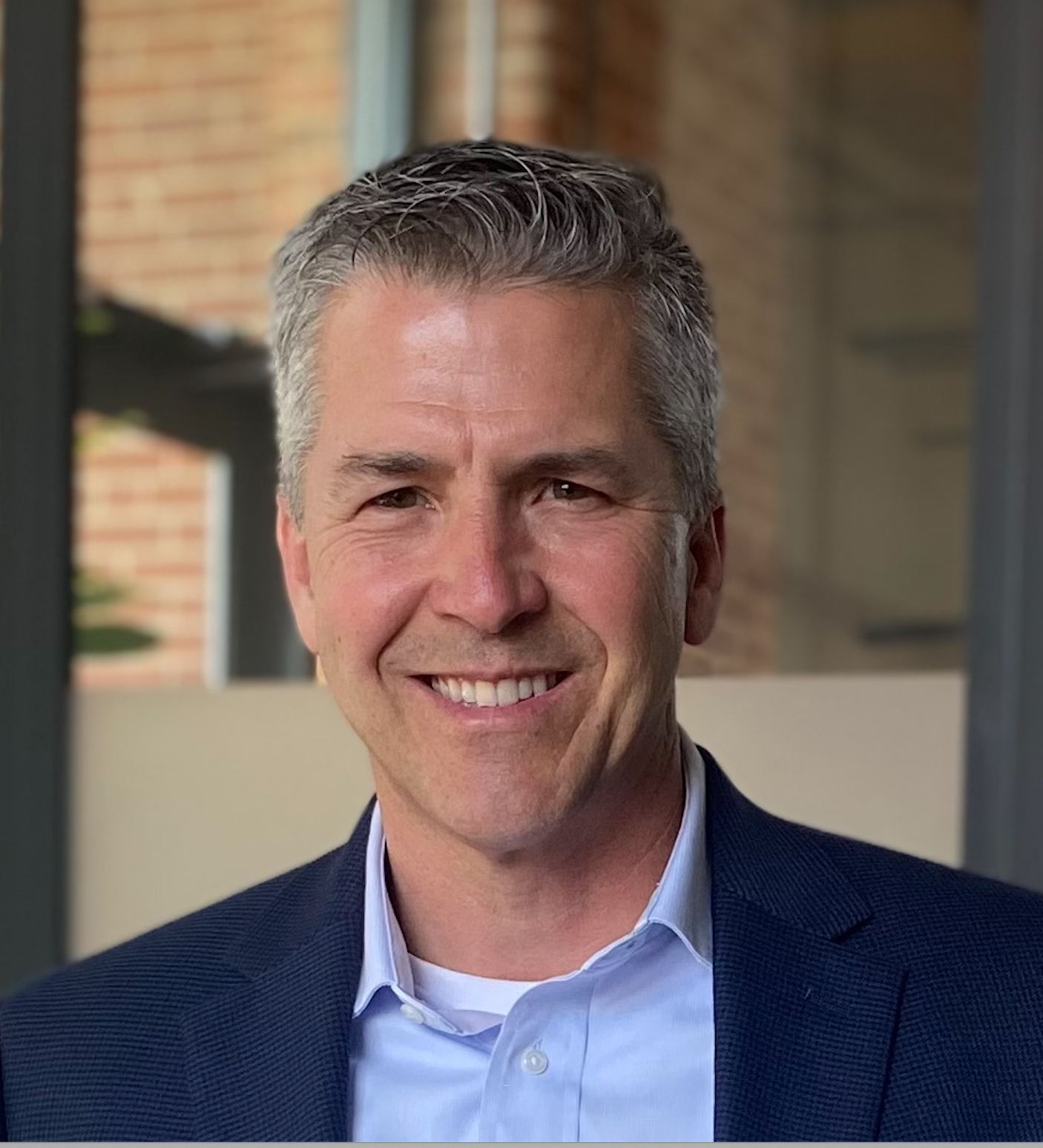
From Open Gym to Generational Change: Cameron Hill's Vision for Greenville's Youth
.jpg)
Listen to this article
Most movements don't begin with a strategic plan. They begin with one person willing to show up — in a neighborhood, on a river, at a dinner table — and ask what God is already doing here.
That's exactly how Lead Collective Inc. started. And Cameron Hill, its Executive Director, will be the first to tell you that none of what it has become was something he could have engineered on his own.
A Ministry Born Outdoors
Before there was Lead Collective, there was GOAT — Great Outdoor Adventure Trips. In 2009, a man named Ryan McCrary began doing something simple and counter cultural: he took his neighbors, middle and high school students from an under-resourced neighborhood in Greenville, South Carolina, on outdoor adventures. Rafting. Rock climbing. Into the kind of creation that has a way of stripping away noise and making room for something deeper.
Ryan began partnering with Boys and Girls Clubs, group homes, and community centers — any organization working with at-risk youth. The ministry grew quietly, faithfully, through relationships rather than press releases.
Then Cameron and his wife arrived in Greenville with a conviction that would shape the next decade of their lives. They believed in asset-based community development — the practice of moving into a neighborhood, becoming part of it, and asking not what's broken, but what God is already doing here, and how we can join it.
They chose Nicholtown. That was thirteen years ago. They're still there.
One Dinner Table at a Time
After three years of listening and learning alongside their neighbors, Cameron and his wife felt ready to act. They wanted to start a ministry for the youth around them — nothing elaborate, just an open gym basketball program. They didn't want to start a nonprofit. They didn't want to go full-time. They just wanted to show up for the kids on their block.
So Cameron called Ryan at GOAT and asked if they could operate under their nonprofit umbrella. Ryan said yes. And GOAT, doing business as ELEOS — the Greek word for mercy — was born in Nicholtown.
What followed was the kind of organic, unplanned growth that tends to happen when something is genuinely needed. The open gym became a leadership program. The leadership program started as dinners around Cameron and his wife's kitchen table — a handful of students, conversations about leading at school, at home, in the neighborhood. Then it became a year-long cohort. Then came a tutoring program that evolved into a full after-school facility. One thing led to another, and suddenly, ELEOS was something no one had planned for.
"We didn't have any paid staff, and eventually the board at GOAT said, 'We really think we need a separate umbrella organization that can oversee GOAT and ÉLEOS so we can steward the resources we have and help these ministries thrive.'"
In 2020, Cameron stepped away from his role as a pastor and became the Executive Director of Lead Collective — the new umbrella organization. A year later, a third ministry launched under that same roof: Reach, working with justice-involved youth through prevention, intervention, and reconciliation programs for students on probation, or even at the local juvenile detention facility.
Three Ministries, One Vision
Today, Lead Collective holds a vision that Cameron describes as high and lofty — deliberately so. The mission is for middle and high school students from historically under-resourced neighborhoods in Greenville to experience the love of Jesus, escape poverty, and flourish for generations to come.
They define poverty in a fourfold way: broken relationship with God, with self, with neighbor, and with the world. And flourishing, by their definition, is the reconciliation of all four — restored identity, healed relationships, and the discovery of one's unique calling and contribution.
GOAT gets students out of their neighborhoods and into God's creation — disconnected from their phones, confronted with beauty and challenge, introduced to resilience. ELEOS does deep, neighborhood-rooted discipleship and leadership development in Nicholtown. Reach walks alongside students who've made choices with serious consequences and helps them find a road back.
Together, they aren't trying to fix poverty with a program. They're trying to participate with God in making things new.
What You Can't Control
Leading an organization like this has a way of confronting a leader with their limits — and Cameron speaks about that honestly.
"I've become acutely aware of all of the things that are out of my control, which is so much. I want students to connect with the God who created them. I want students to believe that they're loved by God. I want that to change the way they see themselves, the people around them, the meaning of life in general — and I can't control any of that."
But the flip side of losing control is learning to watch God work. Cameron has seen checks arrive in the mail from strangers — unsolicited — covering payroll shortfalls. He's watched students who grew up in the program come back as staff members, pouring into kids from their same streets. He's watched young people stand in front of hundreds at a fundraising event and declare, without embarrassment, that they love Jesus.
"The deepest fruit," he says, "is still yet to be seen — because it's the fruit that's going to show up in the lives of their children, and their children's children."
Praying Specific Prayers
When asked what Lead Collective is believing God for right now, Cameron doesn't give a vague, safe answer. He prays specifically.
At the broad level, he's asking God for a move of renewal in Greenville — something that arrests people's attention, awakens hearts to the realities of economic injustice and the brokenness of the juvenile justice system, and draws the city toward God's heart for mercy.
At the ground level, he's praying for transformed hearts among the students in their programs every day. And he's praying for something very specific: thirty men to volunteer as mentors inside the juvenile detention facility — an all-male facility where he believes Christian men have a particular call to invest.
"I believe the Lord wants male Christians to go and invest their time in the young men who are there. I know those young men need that. So we're believing God for thirty men to walk through those doors."
He's also praying for wisdom about what role Lead Collective should play as students graduate from their programs and step into young adulthood — how to keep walking with them toward the full flourishing the vision describes.
Counsel for Leaders Who Want to Bear Kingdom Fruit
For the business leaders, entrepreneurs, and executives watching from the outside, Cameron has a word — and it's not the expected nonprofit pitch for volunteers and dollars. It's a challenge about vision and humility.
He references a quote he can't quite pin to a source: don't tell people how to build a boat — make them long for the ocean. The boat will follow.
"Inspire people with a Kingdom vision that is worth pursuing, and don't be ashamed of it. If the vision seems too big and too grand, it's probably of heaven. Don't reduce it to make it man-sized. Let your heart be lifted toward a God-sized vision."
And then, he says, leave your ego at the door. Be willing to say: here's where I want to go, and I don't know how to get there. Then go find the people who can help you.
Cameron credits much of Lead Collective's growth to exactly this posture. He's had countless coffees and lunches where he simply said, "I don't know how to do this — can you help me?" And time and again, experienced leaders — people with decades of hard-won wisdom — have shown up eager to give it.
"There are so many people who are more seasoned than me who have loved the opportunity to help in an area where I'm still learning," he says. "People who may be stepping back from their primary career but still want to make a contribution — they want to be invited in. Find a way to invite them."
It's the same principle that built Lead Collective from one man's outdoor adventure trips into a three-ministry movement: don't try to do it alone. Ask who God has already placed around you. Invite them in. And hold your hands open for God to do what only He can do.
Continue Reading
More articles in Faith in Business
.jpg) Faith in Business
Faith in BusinessStay Off the Bench: How Kent Evans Is Equipping Dads to Make Disciples
Kent Evans started with a simple question in 2010: what if dads had tools to open Scripture with their sons? Sixteen years later, Manhood Journey reaches over a million people a year.

 Faith in Business
Mary Love-Harris Learned the Hard Way: Christian Doesn't Mean Poor
After years of underpricing her calling and absorbing church hurt, Mary Love-Harris heard God say something that changed everything: 'I never told you to do anything for free.'

 Faith in Business
The Many 'With' the Questions: Tom Johnston on Faith, Recovery, and Leading 'Without' the Answers
Tom Johnston hit bottom before he ever built Talent Optimizer Group. His recovery taught him a leadership lesson most founders never learn: the most important relationship in your business is the one with the person sitting across from you.
.jpg)
WANT TO SHARE YOUR STORY?
Join our community of faith-driven leaders and share how God is working in your business.
Get Started