Navigating Faith and Leadership: The Transformational Journey of Lenny Esposito and Come Reason Ministries
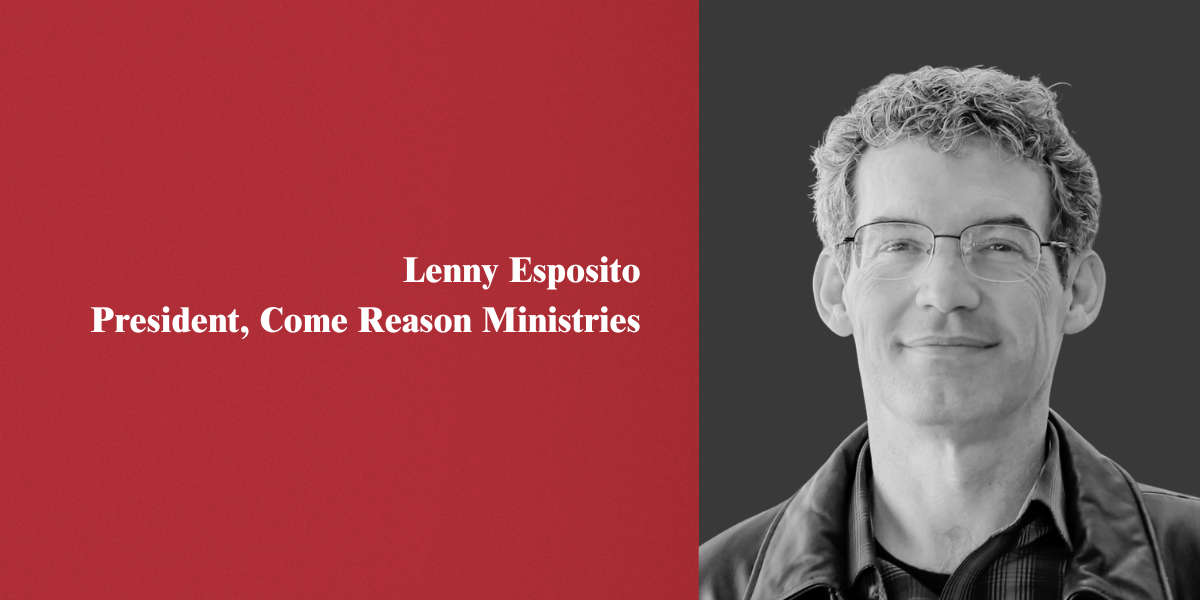
In the dynamic landscape of modern business and ministry, the ability to integrate deeply held faith with practical leadership is more crucial than ever. Lenny Esposito, founder of Come Reason Ministries, exemplifies this integration, navigating the complexities of apologetics in a rapidly changing world. His journey from the nascent days of the internet to leading a prominent parachurch organization offers profound insights into purpose-driven leadership, adaptability, and the enduring power of foundational principles.
Lenny's path began in the mid-90s, at the dawn of the internet age. Intrigued by this new frontier, he simultaneously pursued a deeper understanding of the Bible. This dual passion led him to combine his burgeoning technical skills with a desire to explore the intellectual rigor of faith. He started by answering an atheist's arguments online, laying the groundwork for what would become Come Reason Ministries. This early fusion of technology and theology allowed him to work in marketing while building his ministry, a 'tent-making' approach that provided practical experience alongside spiritual development.
The Mission of Come Reason Ministries
Come Reason Ministries, named after Isaiah 1:18, aims to present 'convincing Christianity to a lost world.' This mission is achieved through three core pillars: educating the church on intellectual and cultural issues, engaging the broader culture through various media, and emboldening and equipping students for faith defense, even taking them to challenging environments like UC Berkeley and Salt Lake City. Lenny emphasizes that the ministry is a parachurch organization, accountable to his local church and driven by a missionary zeal to re-engage a post-Christian pagan culture with foundational Christian truths.
Integrating faith values into business and ministry, however, is not without its challenges. Lenny highlights the unique difficulty in fundraising for apologetics, often perceived as abstract or 'head stuff' rather than a tangible need. He counters this misconception with a powerful personal anecdote: the crisis surrounding the birth of his third son. When faced with his wife's life-threatening condition, his intellectual understanding of God's existence and Christ's resurrection provided an anchor amidst emotional turmoil. This experience underscores the practical, life-sustaining value of apologetics, demonstrating how a robust intellectual faith can provide solace and certainty in times of profound crisis. He also notes the reluctance of some pastors to embrace apologetics, often due to misconceptions about its nature, but argues that it can actually free pastors by addressing complex questions they may not have the time to research.
Navigating Challenges and Maintaining Focus
Lenny's most difficult business decisions often revolve around navigating financial constraints and adapting to evolving cultural landscapes. He recalls the challenge of maintaining ministry output while facing economic upheavals, often requiring him to take on more tasks personally. His faith provides guidance by reinforcing the core mission and reminding him of the ultimate purpose, even when resources are scarce. Biblical principles serve as foundational guideposts, particularly the emphasis on loving God with one's mind (Romans 12:2), which he sees as a spiritual discipline as vital as emotional devotion.
Reflecting on his journey, Lenny offers invaluable wisdom. He stresses the importance of maintaining a clear core mission, likening it to In-N-Out Burger's focused menu – keep the main thing the main thing. Yet, he also cautions against being too narrowly focused, citing the examples of Western Union and Sears, who failed to adapt because they misunderstood their true business. Bell understood he was in the 'communication business,' not just the 'telegraph business.' Similarly, Sears failed to grasp that their core offering was a convenient 'shopping experience from home,' not just a retail store. For Come Reason Ministries, while the core mission of defending Christianity remains, the methods and specific cultural questions addressed have evolved significantly, from classic apologetics to contemporary issues like gender identity and AI.
Wisdom for Aspiring Leaders and Believers
If he could mentor his 21-year-old self, Lenny would impart the wisdom of surrounding oneself with good people – supporters who share the vision and provide encouragement. He would also emphasize the leader's role in setting the tone, casting vision, and charting the course, drawing parallels to Steve Jobs's transformative return to Apple. Finally, he would advise meticulous time management, scheduling deep work, administrative tasks, and specific thematic days to ensure no crucial aspect of the ministry is neglected.
For believers seeking to authentically integrate their faith into professional lives, Lenny offers practical advice: be aware of cultural nuances and the 'language games' played by society. He uses the example of the 'Black Lives Matter' slogan, suggesting a response that transcends political ideology and instead elevates the spiritual truth of inestimable worth given by God. This approach, he argues, avoids engagement in unproductive debates and instead opens doors for spiritual conversations. He also highlights the need for continuous learning and adaptation, as evidenced by his ministry's shift to addressing topics like AI and cultural apologetics. Ultimately, his journey underscores that authentic faith integration is about deep wisdom, practical application, and a relentless focus on transforming lives for the Kingdom.
Written by
Kingdom Factor
Faith-driven executive coaching and peer advisory groups.
Continue Reading
More articles in Faith in Business
.jpg) Faith in Business
Faith in BusinessThe Three-Month Fix That Became a Three-Year Turnaround: Steven Flowers on Saving a Family Shelter
Steven Flowers walked into a shelter with less than two months of cash and a live bed bug taped to his door. Three years later, it is serving twice as many families. Here is how a pastor's phone call changed everything.

.jpg) Faith in Business
Faith in BusinessStay Off the Bench: How Kent Evans Is Equipping Dads to Make Disciples
Kent Evans started with a simple question in 2010: what if dads had tools to open Scripture with their sons? Sixteen years later, Manhood Journey reaches over a million people a year.
 Faith in Business
Mary Love-Harris Learned the Hard Way: Christian Doesn't Mean Poor
After years of underpricing her calling and absorbing church hurt, Mary Love-Harris heard God say something that changed everything: 'I never told you to do anything for free.'

WANT TO SHARE YOUR STORY?
Join our community of faith-driven leaders and share how God is working in your business.
Get Started