Beyond the Pulpit: How Faith Fuels Transformational Leadership in Business and Politics

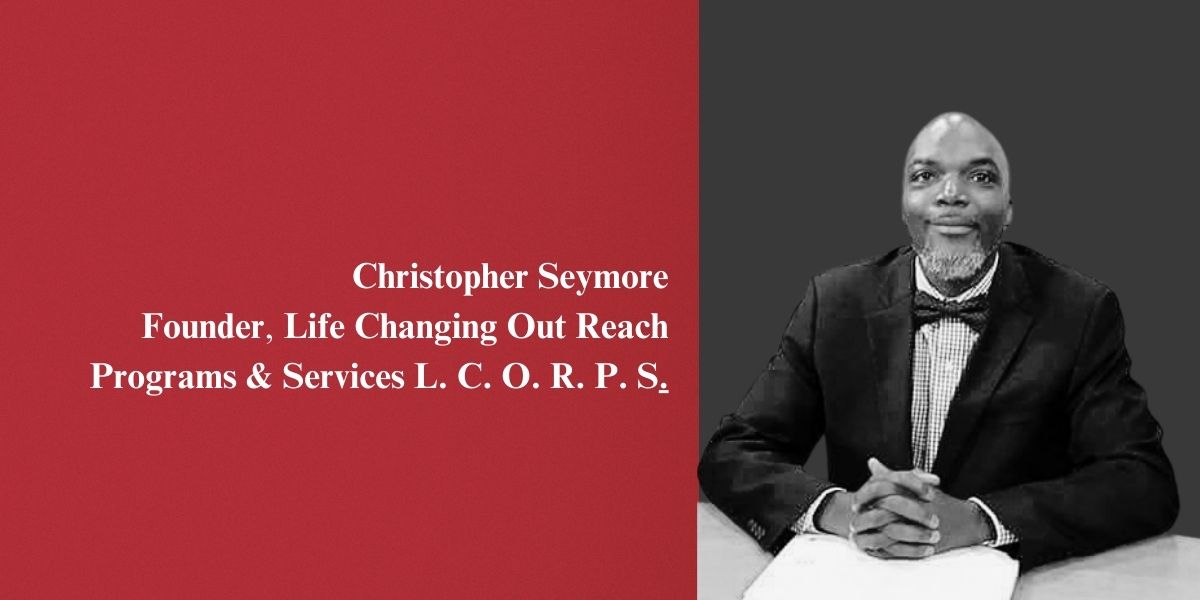
In a world often quick to compartmentalize faith and profession, Christopher Seymore stands as a compelling testament to the power of integrated leadership. As the founder of Life Changing Outreach Programs and Services (L.C.O.R.P.S.) and a hospice chaplain, Seymore's journey reveals a profound commitment to living out his faith in every sphere, from community outreach to the political arena.
Seymore's ministry began with a pastoral calling, evolving into L.C.O.R.P.S., an organization dedicated to empowering the homeless through job creation, occupational training, and essential resource distribution. His work, rooted in a deep understanding of human need, has spanned the nation, providing practical solutions and hope to countless individuals. "Just because I stopped being a pastor didn't mean I stopped being a minister," Seymore asserts, highlighting that his work, whether in business or as a chaplain, is a personal ministry.
Integrating Faith into Every Sphere
This unwavering commitment to his calling extends to his political endeavors, where he has run for Senate and is currently on the ballot for governor in Minnesota. Seymore views political debates as his "pulpit," not for proselytizing, but for shaping policies around biblical principles. He challenges the notion of separating church and state, pointing to the phrase "In God We Trust" on currency and the prayers offered in legislative chambers. For Seymore, faith isn't a private matter but a guiding force for societal good. He translates this conviction into programs like "Giving Youth a Vision," which addresses gang violence by fostering unity and breaking down divisive barriers, mirroring the reconciliation he seeks between political factions.
Seymore's interfaith approach, cultivated through studies with various religious traditions, underscores his belief in universal principles of compassion and service. He emphasizes that true religion, as articulated in James 1:27, is about helping the vulnerable – widows and orphans. This principle forms the bedrock of his "why": there will always be people in need, and L.C.O.R.P.S. exists to provide life-changing solutions.
"The Interfaith Connection of LCORPS"Our Interfaith Non-profit programs and services are dedicated to serving all who seek guidance, counsel, and assistance, without regard to race, religion, socioeconomic status, sexual orientation, ethnic background, gender, or age within our programs and services. We seek to promote understanding, harmony, and love among people by emphasizing what is universal in the teachings of the many spiritual paths, and faith traditions. We have chosen to learn about, respect, and appreciate the diversities of the paths to The One God, and to look for the universal truth contained in each one. The 7 Points of Prayer:
The terms interfaith or interfaith dialogue refer to cooperative and positive interaction between people of different religious traditions (i.e.,faiths) and spiritual or humanistic beliefs, at both the individual and institutional level with the aim of deriving a common ground in belief through a concentration on similarities between faiths, understanding of values, and commitment to the world. Old Testament Scripture: Torah "Learn to do right! Seek justice, encourage the oppressed, defend the cause of the fatherless, and plead the case of the widow." (Is. 1:17 NIV) New Testament Scripture:" Pure religion before God is this: To visit the fatherless and widows in their affliction, and to keep yourself spotted from the world." (James 1:27) Quran: "They are those who fulfill their vows and fear a Day whose evil will be widespread. And they give food in spite of love for it to the needy, the orphan, and the captive.... Saying we feed you only for the countenance of The One and Only God. We wish not from you reward or gratitude. " (Al-Insan 76:8-9) |
Faith-Driven Decisions in Business and Politics
When asked about decisions seemingly counter to worldly business practices, Seymore points to his political involvement. While some may find it unusual for a chaplain to run for office, he sees it as a direct extension of his faith, a refusal to compartmentalize his beliefs. He advocates for the consistent application of biblical principles across all aspects of life, challenging the notion that faith should be excluded from public discourse.
Seymore's giving of time, talent, and treasure is also deeply influenced by his faith. He recounts an incident where, as a pastor, he responded to an urgent Saturday call to open his church's food shelf for a family in need. This experience reinforced the African American cultural adage, "take your sign down if you're not open," signifying that if you profess to serve God, you must be ready to answer the call. This readiness, he explains, is akin to the "turn row preacher" who integrates their calling into their daily work.
Advice for Christian Business Leaders
To other Christian business leaders, Seymore offers a powerful challenge: "By actually doing it." He stresses the importance of practicing what you preach, being available for the mission, and embodying the values of non-racism, non-bias, non-sexism, and non-ageism. He uses the analogy of a baker serving a gay couple, asserting that if you're in the business of making cakes, you make the cake. Jesus, he reminds us, never turned anyone away. He encourages leaders to consider "What would Jesus do?" in every business decision, emphasizing compassion and service over judgment.
For those new to integrating faith and business, Seymore's advice is simple yet profound: consistency. Just as the customer is always right, a consistent demonstration of faith in business can lead to curiosity and transformation in others. He advocates for an "Abrahamic" approach, respecting all faiths and focusing on shared tenets of compassion and service. "Faith without works is dead," he quotes, urging action and perseverance. "Consistency is the advice I would give to a business owner. Stay consistent in your faith case. Stay consistent in your walk with Christ."
Transformational Leadership: Faith in Action
Christopher Seymore's journey is a powerful reminder that faith is not meant to be confined to a single aspect of life. Instead, it is a dynamic force that can transform leadership, business, and society, creating a ripple effect of positive change.
Learn more about Christopher here: https://sites.google.com/view/ishfoffocc/this-is-art_1?authuser=0
Written by
Dr. John Lybarger
Dr. Lybarger is an ICF Master Certified Coach, executive leadership development consultant, industrial/organizational psychologist, ordained minister
Interview with
Christopher Seymore
Founder at Lie Chagning Out Reach Programs and Services (L.C.O.R.P.S.)
Prescott Valley, AZ
Continue Reading
More articles in Faith in Business
.jpg) Faith in Business
Faith in BusinessThe Three-Month Fix That Became a Three-Year Turnaround: Steven Flowers on Saving a Family Shelter
Steven Flowers walked into a shelter with less than two months of cash and a live bed bug taped to his door. Three years later, it is serving twice as many families. Here is how a pastor's phone call changed everything.

.jpg) Faith in Business
Faith in BusinessStay Off the Bench: How Kent Evans Is Equipping Dads to Make Disciples
Kent Evans started with a simple question in 2010: what if dads had tools to open Scripture with their sons? Sixteen years later, Manhood Journey reaches over a million people a year.
 Faith in Business
Mary Love-Harris Learned the Hard Way: Christian Doesn't Mean Poor
After years of underpricing her calling and absorbing church hurt, Mary Love-Harris heard God say something that changed everything: 'I never told you to do anything for free.'

WANT TO SHARE YOUR STORY?
Join our community of faith-driven leaders and share how God is working in your business.
Get Started