Beyond Riches: Building a Legacy of Faith and Financial Integrity

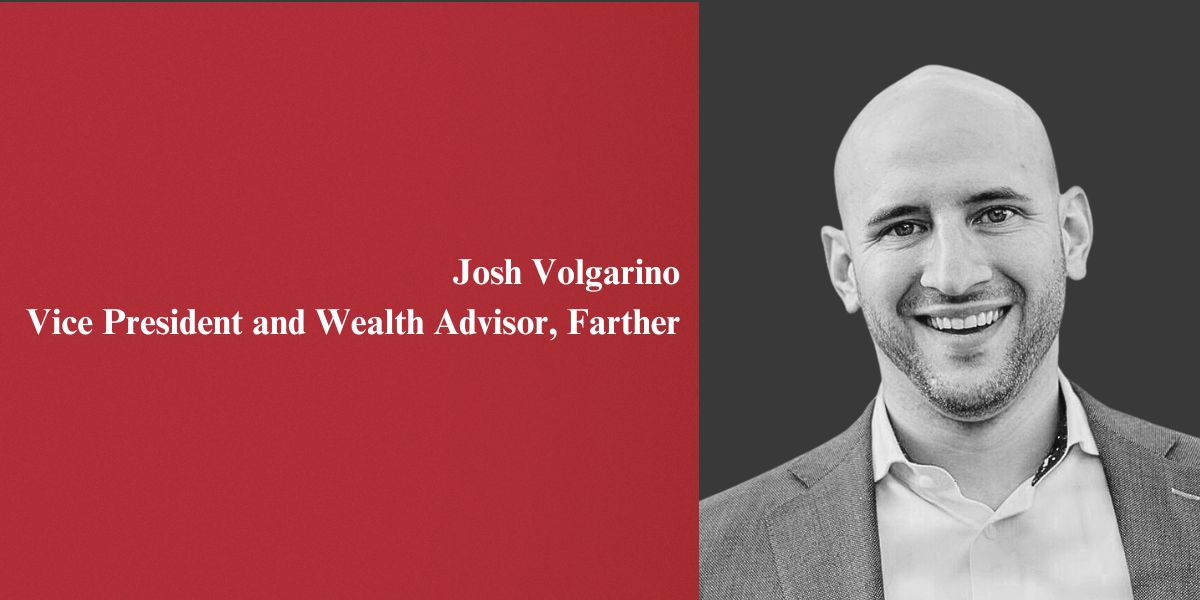
In a world often driven by the pursuit of wealth, how do faith and finances truly intersect? For leaders, entrepreneurs, and growth-minded individuals seeking to align their spiritual convictions with their financial decisions, the journey can be complex. We sat down with Josh Volgarino, Vice President and Wealth Advisor at Farther, to explore biblical stewardship, financial integrity, and building a lasting legacy.
The Foundation of Fiduciary Responsibility: A Faith-Driven Mandate
Josh's journey into finance was deeply shaped by his upbringing. His father, a CFO at a Bible College, instilled in him a "faith first" approach to leadership and finances. This foundational principle led Josh to embrace the concept of a fiduciary, even before it was a legal requirement in all aspects of his work. A fiduciary is legally and ethically bound to act in their client's best interest, not their own. For Josh, this isn't just a professional standard; it's a spiritual imperative. "If your core value is your faith and wanting to stand before God and hear the words, 'Well done, good and faithful servant,' a fiduciary capacity is a must-core value," he explains. This commitment to integrity means operating "above reproach," ensuring that every financial decision reflects a higher calling.
Biblical Stewardship: More Than Just Money
Many Christians grapple with the tension between financial success and spiritual priorities. Josh clarifies that biblical stewardship extends beyond just accumulating wealth. It's about wisely managing all resources, big or small, for God's glory. He references Matthew 6:24, where Jesus states, "You cannot serve two masters." This isn't a condemnation of wealth itself, but a warning against allowing money to become an idol. Josh shares a powerful insight from a pastor who interpreted this verse not as a directive to avoid making money, but as a call to be exceptionally good stewards of whatever resources one possesses, regardless of their size. This principle applies not only to finances but also to how we care for our homes, our talents, and our time. As Josh illustrates with a story about teaching his daughter to care for their table, stewardship is about respecting and preserving what has been entrusted to us.
Navigating Misconceptions and Cultivating a Generational Mindset
Common misconceptions about wealth often hinder individuals from embracing true stewardship. Some believe that faith dictates a life of destitution, while others assume that divine favor guarantees immense riches without effort. Josh recounts a client who, despite his father's significant wealth, saw no need to save for his own future, assuming an inheritance would suffice. This highlights a crucial point: true wealth is often built through diligent effort and discipline, not just inheritance. Most wealthy individuals, Josh observes, "pounded the stone and just were really disciplined."
For families, fostering a healthy financial mindset starts with open conversations. Children observe their parents' attitudes and actions around money. Josh and his wife intentionally discuss finances in front of their kids, providing a "healthy adult conversation around money." While complex financial concepts might be beyond young children, the underlying principles of good stewardship can be taught early. It's about asking, "Am I being a good steward with what I currently have?" This self-reflection, especially during times like New Year's resolutions, encourages a balanced approach – neither hoarding nor squandering resources, but finding the sweet spot of enjoying life today while planning for tomorrow.
Legacy Planning: Beyond Financial Statements
When working with business owners, Josh emphasizes legacy planning. This goes beyond simply passing on financial assets. It's about how one wants to be remembered by family, friends, employees, and the community. Will they be remembered as generous, impactful, or merely as someone who accumulated wealth? Josh stresses that while financial contributions are valuable, showing up and investing time is even more powerful. "Writing checks is great... Showing up is more powerful, I think, because people see that," he states. This commitment of time and talent creates a compounding effect, inspiring future generations to also be generous, regardless of their financial standing. It's about demonstrating a life of service and impact, a legacy that transcends monetary value.
Financial Clarity: The Cornerstone of Effective Leadership
Financial clarity is intrinsically linked to effective leadership. Just as poor financial management can strain a marriage, it can cripple a business. Leaders with a clear financial picture are less stressed, more present with their families, and better equipped to make strategic decisions for their businesses. Josh encourages clients to conduct a SWOT analysis (Strengths, Weaknesses, Opportunities, Threats) of their financial situation. This simple yet powerful exercise helps identify potential risks and opportunities, allowing leaders to operate from a position of strength and make informed choices. It's about replacing a "hope-based strategy" with a data-driven map, ensuring that financial decisions are grounded in reality and aligned with long-term goals.
The "Boring" Strategy Wins: Practical Steps to Financial Freedom
For those looking to begin their journey toward financial clarity and faith-aligned finances, Josh offers practical advice: "The boring strategy wins." True financial independence is rarely achieved through risky, get-rich-quick schemes. Instead, it's the result of consistent, disciplined habits over time. He advises starting with a budget to understand where your money is going, as "where you're spending your money" often reveals "where your heart is." Next, create a balance sheet to understand your net worth, distinguishing between total net worth (including illiquid assets like a home) and liquid net worth (assets easily accessible). This provides a realistic picture of your financial health and helps alleviate financial anxiety. By embracing these fundamental principles, individuals can move beyond mere financial management to cultivate a life of purpose, integrity, and lasting legacy.
Written by
Steven Wilson
Kingdom Factor Coach helping leaders integrate faith and business for lasting impact.
Interview with
Josh Volgarino
Vice President, Wealth Advisor at Farther
Continue Reading
More articles in Faith in Business
.jpg) Faith in Business
Faith in BusinessThe Three-Month Fix That Became a Three-Year Turnaround: Steven Flowers on Saving a Family Shelter
Steven Flowers walked into a shelter with less than two months of cash and a live bed bug taped to his door. Three years later, it is serving twice as many families. Here is how a pastor's phone call changed everything.

.jpg) Faith in Business
Faith in BusinessStay Off the Bench: How Kent Evans Is Equipping Dads to Make Disciples
Kent Evans started with a simple question in 2010: what if dads had tools to open Scripture with their sons? Sixteen years later, Manhood Journey reaches over a million people a year.
 Faith in Business
Mary Love-Harris Learned the Hard Way: Christian Doesn't Mean Poor
After years of underpricing her calling and absorbing church hurt, Mary Love-Harris heard God say something that changed everything: 'I never told you to do anything for free.'

WANT TO SHARE YOUR STORY?
Join our community of faith-driven leaders and share how God is working in your business.
Get Started