When God Closed the Door to Central Asia, Dave Matthews Built a Way to Send Others

Listen to this article
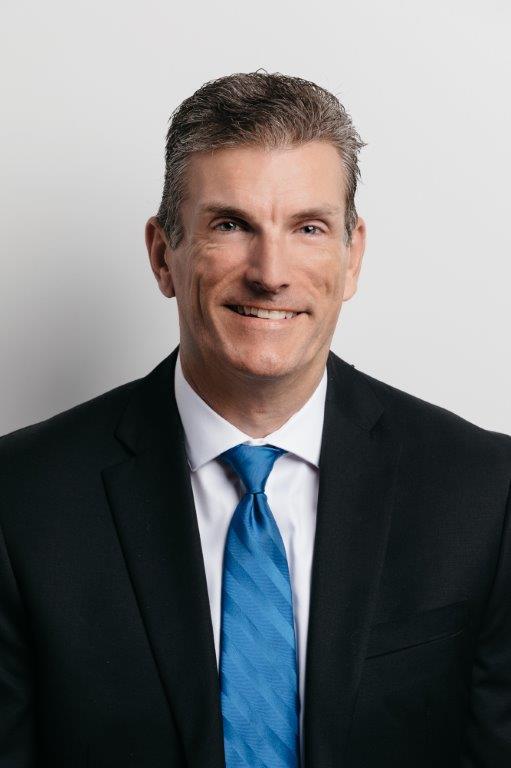
Dave Matthews was fourteen when he walked to the front of a church camp auditorium. A missionary had just described people in the Amazon who had no access to the gospel and would have none unless the global church acted. Dave felt God say, You should be part of the solution. So he went forward, and the leaders prayed over him.
Decades later, that moment still shapes his work. The way he ended up serving, though, is not the way he planned.
The Door That Closed
Dave grew up Latino in Miami after early years in Peru. He studied intercultural studies at Moody Bible Institute, where he first saw the full missions network of agencies, mobilizers and professors. Back home, his church had known little about how to get involved. At Moody, he said, God opened his eyes. He also learned that his calling was not just to the unreached but to Central Asia.
He and his wife prepared to go. Then they saw how many barriers stood in the way, and the door closed.
Many of us know that moment. The plan was clear and the calling was real, but the path is gone. Dave's response is worth noticing. He did not abandon the calling. He asked what he could still do.
"Even if we cannot go, we can help send many other people who can feel stuck just like we are."
A Prayer Network Becomes a Movement
Between college and that closed door, Dave served as a youth pastor at Grace Fellowship Community Church, a congregation of second- and third-generation Korean Americans. For a Latino leader who had already learned how to navigate a mostly non-Hispanic culture at Moody, it was another lesson in cross-cultural ministry. It taught him how much each culture contributes to the kingdom.
When Central Asia was closed to them, Dave and his wife started a prayer network for the Pashtuns, a people group of roughly 90 million across Afghanistan and Pakistan with very little access to the gospel. Their plan was simple: get Latinos praying, and God would do the rest.
He did. Within two years the network spanned twelve countries, and more than thirty people had come forward saying they wanted to serve long-term among the Pashtuns.
That created a hard problem. Dave put it plainly: if you mobilize people to pray and receive a call but never give them a path to go, "we're setting them up to fail." The options were to find a sending structure that could send Latinos from their own cultural starting point, or build one. After much prayer and discernment, they chose to build. Reflejo was born as a Latin American sending agency for training and sending missionaries, their families and their churches into places where the unreached still live.
"If He had told us from the beginning that this is what we're going to be doing, we probably would have said no. But He gave us just enough, one step at a time."
Two Kinds of Stewardship
Reflejo handles budgets, visas, health insurance, member care and the real risk of sending young singles and families into dangerous places. Dave says faith and management are not separate tracks. Both come from stewardship.
First, some things only God can do. In the early days, Dave and his team prayed daily for the right core team, the right candidates, the right funding and the right connections. Second, other things belong to us. God has given each of us twenty-four hours a day, gifts and opportunities, and Dave believes he asks us to use them fully.
"He can turn a car in motion, but if we're not moving, it's hard for Him to redirect us."
So Dave asks hard questions of himself and his team. How intentional are we about growing? How hard are we working? How professional do we want to be, and are we setting the pace for the culture? "If we don't do that, nobody else is going to do that for us," he says. When God clearly says go, even when it defies risk tolerance, they lean into radical faith. When the work is theirs, they carry it as far as they can.
Handing It Off Well
As Reflejo grew, Dave handed the original prayer network to indigenous leaders. He did not do it overnight. He prayed, researched alternatives and potential partners, and built a deeper bench of leaders. He delegated in stages: first "show me before we publish," then "report back," then "I trust you." He also kept teaching the reason behind the ministry until everyone, top to bottom, knew the values and mission. By the handoff, the culture was aligned, and the new leaders had room to change what was negotiable and a community to keep them true to the vision.
Why People Matter More Than Content
Dave is blunt about the digital moment. AI makes content nearly free, and he expects a flood of it. The scarce resource, he argues, is not more content but the right leaders: gifted multipliers and catalysts. No tool can replace finding them.
That means building an organization healthy enough to attract such leaders. Good leaders have options, he notes, and the attraction might be culture, systems or a clear mission. He is also clear that withdrawing is not the answer. "If you and I are not posting about who Jesus is," he says, someone else will fill the space with their own message. Abel Jimenez, who conducted the interview, compared it to living in a digital Babylon, where, like Daniel, we should be better and still take a seat at the table.
What Stuck Churches and Marketplace Leaders Can Do
When churches that care about the Great Commission say they cannot send people, Dave first asks why. If the obstacle is systems, help is available. Reflejo offers resources, and Dave's book walks through recruiting, training and sending a hundred missionaries step by step. It appeared first in Spanish as "Cómo Enviar 100 Misioneros" and in English this year as "How to Send 100 Missionaries" Both in Amazon.
Often, though, the obstacle is deeper. We will send, but only if someone else pays, or only if it is safe, or only if the budget is not touched, or only if we are releasing people we would not miss. He suggests putting a finger on the pain point and asking what is underneath it.
For business leaders, he rejects the line between sacred and secular. Your workplace is a mission field where you may be one of few believers, with access he does not have, even as a missionary. Your skills in finance, legal work, marketing, strategy and change management are also needed by mission organizations. You can serve as a volunteer, a board member, or a coach to missionaries starting businesses.
Monday Morning
Dave points to the parable of the talents. If you are faithful with one talent, God can trust you with more. He urges leaders to learn that lesson while the stakes are small, whether that is a tithe or a modest risk, because the stakes will grow.
This week, you might do three things:
Name your sticking point. If you feel stuck on a calling, ask whether the issue is systems or the heart.
Do your side. Identify one area where you have waited for God to move while avoiding the work that is yours.
Offer your expertise. Contact a mission organization and ask where your professional skills could help.
"You trust me with the small things, will you trust me with the big ones?"
That is the question Dave believes God keeps asking. His own story suggests that when we answer yes, a closed door may not end the calling but multiply it.
Written by
Abel Jimenez
Kingdom Factor Coach helping leaders integrate faith and business for lasting impact.
Continue Reading
More articles in Faith in Business
 Faith in Business
Ken Gumbiner: Work the Plan, Guard Your Humility, and Keep Getting Back Up
After 38 years in insurance, Ken Gumbiner left corporate life to help smaller companies grow. His method: a written plan, a daily time with God, and the humility to get back up when you fall.

 Faith in Business
The Loneliest Chair in Business: Why Scott Brunscheen Spent 12 Years Building Tables for Faith-Driven Leaders
After 50 years in nonprofit work, Scott Brunscheen discovered that the most successful business owners in Des Moines shared a common struggle: they felt completely alone in trying to live out their faith at work.
 Faith in Business
Surrender First: How Jamar Jones Rebuilt His Business After Burnout
A torn vocal cord ended his music career. A layoff pushed him to start over. Burnout finally taught Jamar Jones the lesson that reshaped his business: surrender comes first.

WANT TO SHARE YOUR STORY?
Join our community of faith-driven leaders and share how God is working in your business.
Get Started