When God Calls You to Set Down Your Plans: Lora Avery's Journey from Boardroom to Bedside
.jpg)
Listen to this article
Lora Avery had spent decades mastering the art of the plan. As a manufacturing plant accountant turned IT business process specialist, she'd built a career on creating systems that worked—frameworks that helped global teams operate smoothly across cultures and time zones. She knew how to map the path from problem to solution.
So when she retired from corporate life and felt God calling her into writing, she did what came naturally: she created a model. A self-leadership framework built around the simple truth that life is about loving God and loving people. It was elegant, practical, grounded in her business expertise and her faith. She was ready to test it, refine it, launch it.
God had other plans.
When Every Door Slams Shut
"I kept getting doors shut," Lora recalls. "Door shut, door shut, door shut." She'd identified the perfect person to help test her model—a woman at church who would have been ideal. But every time Lora tried to ask her, something interrupted. Four times in one conversation. Finally, the woman had to leave.
"It was like, okay, God, I get it. Not now."
That redirection led Lora into devotional writing instead, and her denominational publisher picked up her first book two and a half years ago. She discovered her true calling wasn't creating business frameworks—it was helping people, especially children, understand the beautiful simplicity at the heart of faith.
It's all about loving God and people. I got sucked into the complexity and forgot what it was all about.
Lora had grown up in church, accepted Christ young, knew it was about relationship with God. But like many of us, she got tangled in the mechanics—memorizing verses, following prayer formulas, checking off spiritual disciplines. Good practices, yes. But somewhere along the way, she'd lost sight of the center.
Now, as a grandmother, she's determined her grandkids won't make the same mistake. "I'll ask them, 'What's life all about?' When they were younger, they'd say, 'Loving God and loving people.' Now that they're teenagers, they roll their eyes and say, 'Loving God and loving people.'"
The Book Launch That Wasn't
By early 2026, Lora had big plans again. Her children's book, The Biggest Why: Finding the Real Treasure is Loving God and People, was releasing in March. She had a launch strategy, speaking events lined up, momentum building.
Then came mid-February. Lora was driving back from a conference, planning to spend the weekend with her mom. What she didn't know—because her mom hadn't wanted her to worry on the drive—was that her mother had been blown over in the wind days earlier, destroying her shoulder in the fall.
"I was surprised when I walked in the door," Lora says. The injury required surgery, months of recovery, and constant care. Her mom couldn't dress herself, couldn't cook, couldn't manage daily tasks that had always been second nature.
Lora faced a choice: push forward with her career plans, or step back and become a full-time caregiver.
"I'm not a nurse, I'm not a chef, I'm not a beautician," she says. "And my mom needed all of those things."
The Crisis Point
After the first few weeks of caregiving, Lora went home completely spent. She felt like she was failing at everything—unable to meet her mom's needs with the skill of a professional, unable to keep up with her writing and speaking commitments.
Depression set in. The woman who writes about loving God and people felt crushed under the weight of actually doing it.
"I was ready to quit," she admits. "I thought, okay, I can't do the writing anymore. Time to do something else. God, tell me what you want me to do next."
But God didn't release her from writing. He didn't tell her to choose one or the other. Instead, He gently healed her from the depression and showed her a third way.
God gently brought me to a point of saying, 'I'll give you everything you need to do everything I'm calling you to. Scale back a lot, but don't drop it. Your mom needs you right now. That's what I'm calling you to do.'
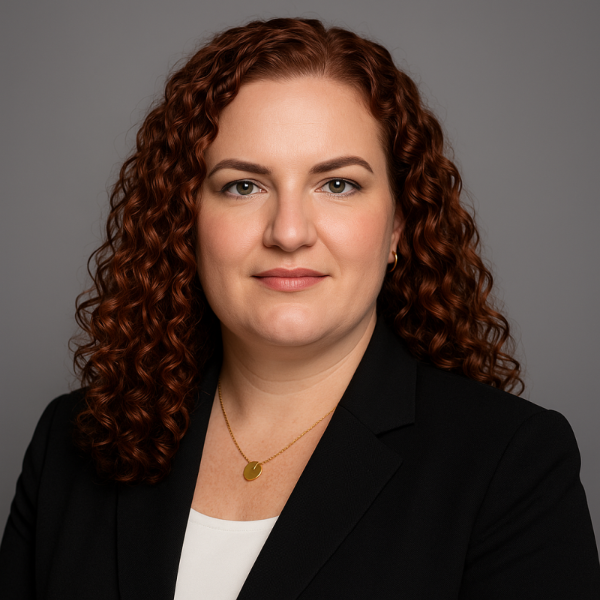
So Lora made the decision. Main emphasis on Mom. Side career for writing. And she moved into her mother's dining room—the room with the beautiful picture hanging behind her during our interview—to be present for the long recovery ahead.
What Business Leaders Miss About Love
Lora's corporate background gave her a framework for understanding stewardship, systems, and strategic planning. But it took stepping away from that world to grasp something essential: we don't change occupations when we change roles.
"When one of my friends retired from the business environment, I realized she wasn't changing occupations," Lora says. "She was still God's ambassador in the world. She'd been God's ambassador in the workplace, and she was going to be God's ambassador in mission trips beyond that."
That insight reshaped everything for Lora. Our job title is a subset of our true calling. We change locations, we change responsibilities, but our real work remains the same: love God, love people, right where we are.
It sounds simple. Almost too simple. But Lora discovered that living it out requires something most high-achievers resist: listening for what God wants next, not what we've already planned.
"You don't have to do all the things all at once, all the time," she says. "You just need to take the next step that God's calling you to at that point in time. And watch for those times when He takes a little turn in the road that you're not expecting—when those opportunities to love in a deep way that's uncomfortable come up."
The Source You Can't Skip
Every morning, Lora types her prayers. Not because typed prayers are holier, but because that's what keeps her focused. Her mind wanders when she prays silently; typing forces her to stay present with God.
That morning practice—praise, thanksgiving, confession, listening—is where she gets filled up. And she's learned she can't skip it.
"First John 4:19 tells us we love because He first loved us," Lora explains. "My quiet time in the morning is about getting filled with His love. And I notice the difference when I don't do it."
The irony isn't lost on her. She's literally writing books about loving God and people, but without that daily refilling, she runs dry. She can't give what she hasn't received.
Paul said it plainly in 1 Corinthians 13: anything we do without love is meaningless. Not ineffective. Not suboptimal. Meaningless. You can have the perfect business model, the right strategy, the best plan—but if it's not flowing from a heart filled with God's love, it's noise.
Monday Morning Application
If you're a leader juggling competing priorities right now, Lora's story offers three practical steps:
First, ask God what He's calling you to right now. Not what made sense last quarter. Not what you planned at the beginning of the year. What is He asking of you today? This week? Don't assume the path forward is the path you mapped out six months ago.
Second, protect your time getting filled with God's love. You can't lead with love if you're running on empty. Find the method that works for you—typed prayers, walking prayers, early morning stillness—and guard it like you'd guard your most important client meeting. Because it is.
Third, watch for the uncomfortable opportunities. The ones that don't fit your plan. The ones that cost you momentum. Those might be exactly where God is calling you to demonstrate that your faith isn't just a framework—it's a relationship that shapes everything.
Lora's 2026 didn't look anything like she'd planned. Her book launched while she was changing bandages and learning to cook meals for two. Her speaking calendar got gutted. Her writing time got squeezed into stolen moments between caregiving tasks.
But she's exactly where God called her to be—living out the message of her children's book in the least glamorous, most exhausting way possible. Loving God and loving people, one difficult day at a time, from a dining room that isn't hers.
That's not the story of a failed year. That's the story of a faith-driven leader who understands that the real treasure isn't in the plans we make—it's in the obedience we offer when God rewrites them.
Continue Reading
More articles in Faith in Business
 Faith in Business
Scott Murphy: Building Teams That Matter Beyond the Bottom Line
When Scott Murphy joined Magum Contracting, he brought more than construction expertise—he brought a conviction that companies thrive when people are seen, valued, and equipped to grow.
.jpg) Faith in Business
Faith in BusinessWhen the Hidden Room Opens: Jamie Young’s Journey from Secrecy to Surrender
After 35 years in automotive and a secret 30-year struggle with pornography, project manager Jamie Young discovered that being saved isn't the same as being surrendered—and that one turning point verse could dismantle decades of shame.
.jpg) Faith in Business
Faith in BusinessFrom Winning at All Costs to Winning Through Giving: How Kevin O'Callaghan Redefined Success
Kevin O'Callaghan thought success meant scoring goals—his goals. Then three kids, a washer-and-dryer moment, and a growing faith showed him a different scoreboard altogether.

WANT TO SHARE YOUR STORY?
Join our community of faith-driven leaders and share how God is working in your business.
Get Started