When Dignity Demands a Voice: How Misty Roberts Built a Ministry Around Medical Patient Modesty
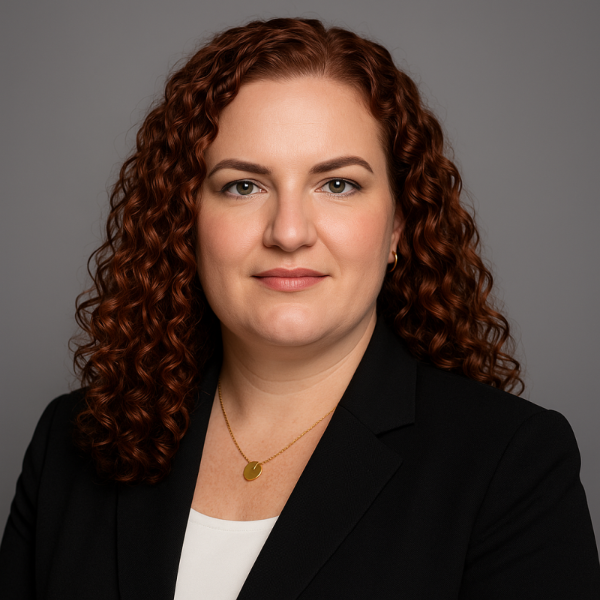
.jpg)
Listen to this article
Misty Roberts was six years old the first time she understood what dignity looked like in practice. She was watching her grandmother care for her great-grandmother, who was bedridden and living with advanced Alzheimer's disease. Her great-grandmother could not speak, could not respond, and by many measures, was no longer aware of her surroundings. And yet, every time her grandmother bathed or changed her, she closed the door. She hired only female caregivers. She made certain that the men of the household, grandfathers and fathers, would not accidentally witness a moment of exposure.
No one told her grandmother to do this. No policy required it. She simply believed that a person's dignity does not lapse when their awareness does.
That conviction took root in a young Misty Roberts and never let go.
A Problem Most People Never Think About, Until It Happens to Them
Decades later, that childhood memory became the foundation of Medical Patient Modesty (MPM), a Christian-based 501(c)(3) nonprofit Roberts founded and has led as president since 2009. The organization exists to do something the healthcare system rarely does on its own: educate patients about their right to bodily privacy, same-sex care teams, informed consent, and protection from misconduct in medical settings.
It sounds simple. In practice, it is anything but.
Many patients don't realize they can request a same-sex medical team for intimate procedures. Many don't know that some hospitals still require patients to remove all undergarments even for surgeries that don't come near that area of the body, a knee surgery, for example. Fewer still understand that specialized garments exist specifically to reduce unnecessary exposure during procedures like colonoscopies or hip surgeries. And almost no one walks into a hospital aware of how often intimate exposure or touching can occur while a patient is sedated, without their knowledge or consent.
Roberts knows this not from theory, but from years of hearing from patients who found her website only after something went wrong, people who wished they had known sooner.
"Many individuals discover MPM's website only after experiencing negative or traumatic medical events, often wishing they had found it sooner so they could have been better prepared to advocate for themselves."
One case that illustrates this well involved a man in Iowa who had a positive experience during a cardiac catheterization procedure because he was allowed to remain fully awake and his genital area was neither exposed nor shaved. As a result, he developed a false sense of security about the level of respect for patient modesty at that facility.
Two years later, during a venous ablation at the same hospital, his experience was very different. He was fully sedated without being told why that level of sedation was necessary. While he was sedated, his disposable underwear was removed and his groin was shaved without his knowledge or consent, even though the incisions were made around his knee. Only afterward did he learn that venous ablation procedures are commonly performed with patients fully awake at many other facilities.
For him, the harm was not only physical exposure. It was the realization that trust had been assumed, consent had been bypassed, and his bodily privacy had been completely disregarded once he was unable to speak for himself. His story is not an outlier. It is a pattern MPM works daily to interrupt.
The Unlikely Founder God Prepared for This Work
Roberts is deaf. She has been since early childhood. When her parents learned of her hearing loss at 22 months old, her mother immediately began learning sign language so they could communicate. That commitment shaped Roberts profoundly, giving her strong language skills and a resilience that would serve her in ways no one could have anticipated.
Her deafness, she believes, is not incidental to her calling. It is central to it. Because she cannot rely on auditory input, Roberts has developed an unusually sharp sense of observation. She notices what others miss. She reads situations carefully. She picks up on details that slip past people who are listening rather than watching.
A friend's words after her own traumatic childbirth experience confirmed what Roberts had begun to sense about her purpose:
"You will have a bigger impact than you think. Maybe God has given you this special mission, could even be a great advantage to be a deaf woman communicating what no one else can. How amazing is that."
Roberts received those words as more than encouragement. She received them as confirmation. "I am not sure if I would have started Medical Patient Modesty if I had not been deaf," she says. What the world might classify as a limitation, God had been using all along as preparation.
Running a Ministry by Faith, Not by Scale
MPM operates without loans. Roberts made that decision early and has held to it, even in seasons when her own income from the organization is modest. She believes the funding must come from God, and she has organized her fundraising accordingly, online silent auctions, a duck race fundraiser, sponsorships, and community partnerships, including donating unclaimed auction items like resort gift certificates to homeless ministries.
But the deeper test of her faith has come not from finances, but from the pressure to measure success the way the world does.
Years ago, a well-meaning fellow Christian expressed concern that MPM didn't appear to have a large following. It was the kind of comment that might have derailed a leader whose identity was tied to metrics. Roberts responded with scripture instead.
"I believe the value of a ministry is not measured solely by the number of people it reaches, but by the impact it has on those it serves. This reminds me of Luke 15:7, where Jesus said there will be more rejoicing in heaven over one sinner who repents than over ninety-nine who do not need to repent."
Every person matters to God. That is the standard MPM runs on.
Grace Under Pressure, Light in Dark Spaces
Patient modesty is not a comfortable topic. Roberts knows this. She has watched people avoid it, dismiss it, and occasionally push back hard against it. But some of the most painful resistance has come from the very arena where patients should be safest, the medical community itself.
MPM exists in a space many healthcare professionals would rather not examine. When patients say they were exposed unnecessarily, touched without meaningful consent, sedated without clear explanation, or dismissed after raising concerns, they are often met not with compassion, but with defensiveness. Some are told they misunderstood. Some are treated as difficult. Some are made to feel that their modesty concerns are unreasonable, outdated, or secondary to provider convenience. And when MPM gives those patients language, resources, and courage to speak up, the organization itself can become a target of dismissiveness.
Roberts understands that this resistance is part of the work. Advocating for patient dignity means challenging assumptions that have been normalized for decades. It means asking uncomfortable questions about consent, exposure, staffing, sedation, and power. It means standing beside harmed patients who are often already carrying shame, confusion, and fear, then helping them understand that their concerns are valid and their voices matter.
She has dealt with difficult individuals, people who are rude, dismissive, or openly hostile to the work she is doing. Her response, consistently, is grace.
"I strive to be nice to them even when they are rude," she says. "I believe it is always important to respond with grace."
That posture is not naivety. It is strategy, the kind shaped by faith. Roberts understands that MPM will only fulfill its mission if the people it serves feel safe enough to share their stories, ask their questions, and trust the information they receive. That requires an environment built on respect, not defensiveness.
Her parting challenge to other Christian leaders pulls from one of Paul's most grounding exhortations: "And let us not grow weary while doing good, for in due season we shall reap if we do not lose heart" (Galatians 6:9). For Roberts, those are not merely motivational words. They are the operating instructions for a ministry built on dignity, one quiet, courageous act of advocacy at a time.
If you want to support Medical Patient Modesty or learn more about patient rights, visit www.patientmodesty.org.
Continue Reading
More articles in Faith in Business
.jpg) Faith in Business
Faith in BusinessThe Fan Blade That Changed Everything: Byron Low on Loving People Without a Drum to Beat
A curious engineer on his lunch hour became an executive coach. Byron Low explains why he follows God's nudges, loves people first, and refuses to trust in chariots.

.jpg) Faith in Business
Faith in BusinessThe Three-Month Fix That Became a Three-Year Turnaround: Steven Flowers on Saving a Family Shelter
Steven Flowers walked into a shelter with less than two months of cash and a live bed bug taped to his door. Three years later, it is serving twice as many families. Here is how a pastor's phone call changed everything.

.jpg) Faith in Business
Faith in BusinessStay Off the Bench: How Kent Evans Is Equipping Dads to Make Disciples
Kent Evans started with a simple question in 2010: what if dads had tools to open Scripture with their sons? Sixteen years later, Manhood Journey reaches over a million people a year.
WANT TO SHARE YOUR STORY?
Join our community of faith-driven leaders and share how God is working in your business.
Get Started