The Wise Steward: How Katie Anne Leads Women from Broken Patterns to Biblical Wholeness

Listen to this article
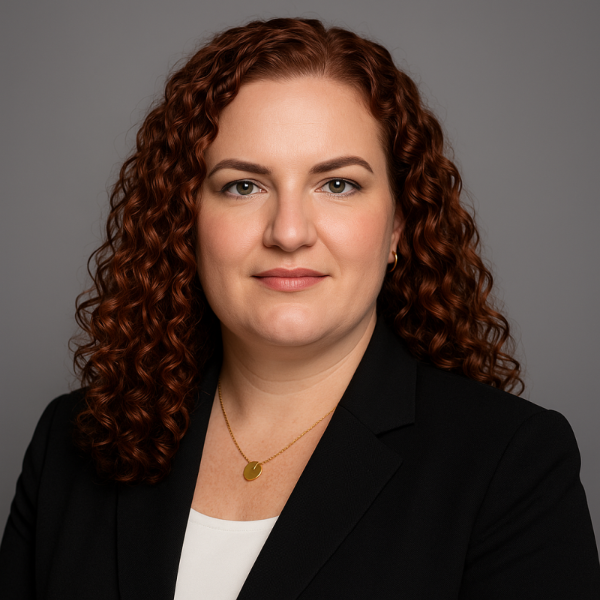
Katie Anne thought she had done everything right. She'd focused her entire life on not repeating her parents' contentious divorce. She'd built a marriage, started a family, pursued all the markers of a stable life. And yet, sitting alone in her new home during her first week of 50/50 custody with her five children, she realized something devastating: she had simply found and replaced the exact same dynamics in a different way.
"Without any of those things being healed, I just ended up repeating them," Katie explains. "And then I realized my children were repeating them too."
It was in that quiet, solitary moment—separated from her marriage, her extended family states away, and cut off from her community after leaving the LDS faith—that God finally got her attention. "Now that I have your attention," she heard Him say. She had been asking for years how to get closer to God, what was missing, what was wrong. The answer, it turned out, required her to stop moving long enough to listen.
When Salvation Doesn't Mean Healing
Today, Katie Anne runs Selah Healing, a coaching program for divorced Christian women rebuilding their lives. The name comes from the Hebrew word found throughout the Psalms—a musical interlude, a rest, specifically a rest with God. It's a twelve-week journey focused on identity work: rebuilding who God says you are, understanding your relationship with Him, and learning to build biblical relationships with others.
But Katie's mission goes deeper than coaching. She's building a nonprofit to help women navigate every aspect of life after divorce, creating biblical communities that break toxic relationship patterns before they're passed to the next generation. "Just because you're saved does not mean you're healed," she says with conviction. "The point is to really work on healing at every level for an individual so they can have a healthy, wonderful, thriving relationship the way God really designed and intended it to be."
It's a mission born from lived experience. Katie grew up Mormon, caught in the middle of her parents' bitter divorce from age four onward. She carried those wounds into her own marriage without realizing it. Even after her separation, she didn't immediately see the pattern. She went to therapy, pursued different resources, kept asking what was missing—but the breakthrough came from an unexpected source.
The Scales That Fell Away
After her separation, someone challenged Katie to read the Bible. Not as a theological exercise or a spiritual discipline, but simply to read it. As she did, for the first time in her life, she had a startling thought: "I think I might be wrong."
As soon as I had that opening, just that question, it was like the floodgates opened. It was kind of like Paul, where the scales fell off his eyes. I just felt like spiritual scales fell off.
What followed was what Katie calls "drinking from a spiritual fire hose." Over four years, God revealed where His truth had been taken out of context in her previous faith, where she'd been deceived, and who she actually was in Him. The journey wasn't angry or bitter—Katie hadn't been looking for her theology to be wrong. She'd been confident in her beliefs. But when she opened herself to the question, everything shifted.
That spiritual awakening laid the foundation for everything that came next. Katie realized that everything she'd built her life on was based on who she believed she was, but God was trying to show her who she really was. The identity work that now forms the core of her coaching emerged from those quiet weeks alone, when God taught her what it means for Him to be her husband, what those relationships should look like, and what she's supposed to be looking after.
Choosing Your Battles—Or Letting God Choose Them
One of the most powerful lessons Katie learned came from an unlikely source: the disturbing story of the Benjaminites in Judges. In the passage, a concubine is abused and left for dead, and the outraged Israelites go to war against the Benjaminites. They ask God who should go into battle first, and He tells them Judah. Thirty thousand die. They ask again who should go next. More die. Finally, devastated, the Israelites stop to fast—and ask a different question: "Lord, is this even our battle to be fighting?"
When we bring our requests to God about what we are supposed to do and how we are supposed to do it, do we often ask, 'Is this even what You want me to be doing?'
That question transformed how Katie approaches her business. Not everything is hers to conquer. Sometimes she's not the messenger. Sometimes it's not her voice that's needed. Sometimes God just needs her willing heart and her willingness to ask, "Is this the door You want me going through? Is this a battle You want me waging?"
It's a radically different approach from the hustle-and-grind mentality that dominates entrepreneurship. Katie's prayer is consistent: "Let me get out of Your way, Lord. Show me where You want me to be. I am willing to take the steps. I am willing to open my mouth, but I want to do it where You want me to be."
The results speak for themselves. Doors have opened that Katie never anticipated. Opportunities have arisen in places she never expected. Not because she forced them, but because she got out of the way.
Living Like God Is Telling the Truth
One of Katie's pastors once said something that struck her deeply: "Faith is living like you believe God is telling the truth." In coaching, she'd learned that your actions reflect what you actually believe. So if God is telling the truth—and Katie believes He is—then her life must reflect that belief.
That conviction carries particular weight given her context. Her children's father is still active LDS. Her family remains active LDS. If she wants them to see that something is different, that what they've been taught should raise a question, then she has to reflect that difference. "I have a different gospel," she says simply.
Katie describes herself as a steward—a word she returns to again and again. "Lord, let me be a wise steward over everything You put in front of me," she prays. It's a prayer rooted in Scripture, in Solomon's request for wisdom to lead God's people righteously. And it carries a caution: Solomon was the wisest man who ever lived, yet at the end of his life he realized he hadn't done anything actually meaningful under the sun.
"If I can just have His wisdom," Katie says, "make me know Your ways and lead me in Your paths and teach me Your wisdom and Your truth, then He is the one doing the teaching on me."
Stretching Out Empty Hands
Right now, Psalm 143:6 guides Katie's work: "I stretch out my hands to You; my soul thirsts for You like a parched land." When she first read it, she felt spiritually starved—a woman who'd spent her whole life seeking but never quite reaching what she needed. But in this season, she understands it differently.
I stretch out my arms to You and my soul thirsts for You because I alone, in my own strength, am not enough. I truly cannot do it. But if I stretch out my arms to You, and You are the one leading it, and my eyes are fixed and focused on You, then everything is always going to be exactly the way it is supposed to be.
Katie is now in her third year of coaching, currently pursuing a degree in biblical theology, business, and leadership from Liberty University—set to finish in August. She's raising five children, one of whom is deaf. She's building a nonprofit. She's recording podcast episodes, creating free resources, and walking with women through the hardest season of their lives.
But none of it, she insists, is hers. "I am doing this because I just want to share what God wants me to share with the people He wants me to share it with, in the way He wants me to share it, because it is His."
Her encouragement to other Christian leaders is simple but profound: never lose sight of your why, because your why drives everything. There will always be periods of discouragement, doubt, worry, concern, highs and lows. The path is never linear. But if you remember the why, and you have the foundation on God and His guidance and direction, it changes everything.
"Keep your eyes focused on Him and not on what you can see in front of you," Katie says. "What is the unseen? What is the eternal? Because that is really what it is all about. It is not about what is here and temporary. This is all going to waste away. As Solomon says in Ecclesiastes, everything is meaningless under the sun. But if we are doing it for His glory and His goodness, and He is the one leading it, then it always has purpose and meaning and direction."
Katie Anne is on a mission to challenge the statistic that 50% of marriages must end in divorce. She believes that when you heal an individual—truly heal them, not just save them—you can build biblical homes one person at a time, and from those homes, biblical communities. She's asking the question the Israelites should have asked first: Is this the battle God wants me to fight?
And in the asking, she's found her answer.
Continue Reading
More articles in Faith in Business
.jpg) Faith in Business
Faith in BusinessWhen Competence Becomes the Measure
Chris Gates went from working his way through community college to leading global technology teams. His hardest lesson was that the competence that made him succeed was quietly keeping him from needing God.

 Faith in Business
Healing Hearts So Freedom Flourishes: Will Frazier's 13-Year Road from Shame to Sanctuary
Will Frazier spent thirteen years fighting a battle he couldn't win alone. Now he's building the safe haven he wished he'd had — for every leader still hiding in plain sight.
.jpg) Faith in Business
Faith in BusinessThe Fan Blade That Changed Everything: Byron Low on Loving People Without a Drum to Beat
A curious engineer on his lunch hour became an executive coach. Byron Low explains why he follows God's nudges, loves people first, and refuses to trust in chariots.

WANT TO SHARE YOUR STORY?
Join our community of faith-driven leaders and share how God is working in your business.
Get Started