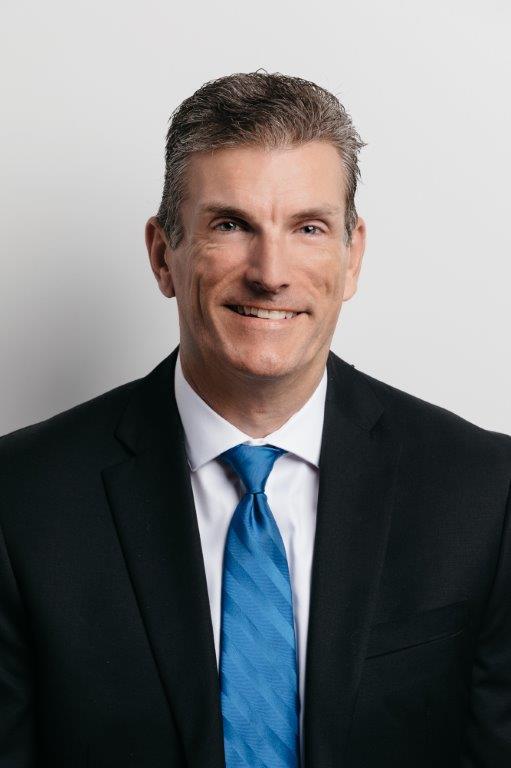
Ken Gumbiner: Work the Plan, Guard Your Humility, and Keep Getting Back Up

The day Ken Gumbiner got married, his family announced their hardware chain was going bankrupt. The business he had worked in since high school, and the 25 percent stake he expected to inherit at 21, were gone. He had a new wife and no plan.
His older brother, who had become a father figure after their father died young, offered a blunt suggestion: "Go into sales." Ken asked what he would sell. "Insurance." He listened, and that advice launched a 38-year career.
Today Ken is the founder of KMG Growth Partners and a fractional sales leader. He is also a chapter leader in a network of Christian business professionals. The path between those two points, he says, was never a straight line. It was a pattern of falling, getting back up, and learning to work a plan.
A Field in Gary, Indiana
Ken's faith story begins long before his business story. At nine years old, growing up poor in Gary, Indiana, he was walking through a field when, in his words, "God revealed himself to me. I found myself on my knees worshiping God."
The moment ended quickly. A teenager in the neighborhood noticed what was happening and called him out, and young Ken, embarrassed, ran. "I tell people I ran for a long time," he says. "But God stayed with me."
At 22, after what he describes as a lot of trouble, he found himself at an altar. He tried ministry as a vocation, but it did not become his career. Insurance paid the bills and supported his kids, while his ministry happened on the side, working with teenagers.
"I'm no different. I fell many times in my life, but I kept getting back up."
He still starts every day with study and prayer. His order of priorities is simple: time with God first, then family, then everything else.
The Plan Is the Plan
Ken's business philosophy comes from a lesson he learned the hard way. In his first sales job, the company assigned him a trainer. Ken thought the man was odd and mostly ignored him. When it was time to actually sell, he had to return to everything the trainer had taught him.
That lesson shaped his career. Everywhere he went, he built structure: a methodology, a strategy, a process. "What do we need, and how do we get there? And then you've got to work it."
At Independence Holding Company, he applied that approach to a business that grew from $38 million into one acquired by Swiss Re, now a billion-dollar operation. At Berkshire Hathaway Specialty Insurance, he found the opposite. There was no playbook and no guide rails, and people were taking risks that put the company in jeopardy. He spent months evaluating the situation, installed a plan, and brought in people who understood it.
It was disruptive. Some team members left. But the accident and health block he was building grew past $450 million in under four years, and it stayed profitable. "Anybody can grow a company and not make money," he says. "That's no good."
Ken sees the same principle in Scripture. "The Bible leads us in a direction toward God. If we follow it, we get there." His business plan and his spiritual practice rest on one conviction: guidance is necessary, and assuming you already know is dangerous.
Working On Your Life, Not Just In It
Asked what growth requires beyond working harder, Ken turns the question toward purpose. "We spend our life involved in life. We don't stop and ask: where am I, where do I need to go, what am I called to do?"
He applies the same idea to business owners. Many founders are "head down every day," working in the business and never on it. That gap is what led him to start KMG Growth Partners, which serves smaller companies on a subscription basis.
He also adds something many leaders skip: listening. "We talk to God a lot. We don't often spend time contemplating and listening. How do you know what the plan is if you don't take the time to listen?"
Giving Experience Away, Within Reason
Ken's network work began almost by accident. While building referral partnerships, he met many people he connected with, and many were Christians. Those relationships grew into the Advisors Table, which includes about ten fractional C-suite executives in one group and about twenty subject matter experts in another. He also leads a healthcare table of about ten members that meets weekly and is, as he puts it, "a ministry to the world, but also to each other."
Members share experience freely with each other. With prospective clients, he lets the work earn trust first. "You can't just assume they're going to trust you," he says. Then he turns to a verse: the workman is worthy of his hire. "We've proven the work. Now we start being paid for it."
When a sales team is working hard and still missing the number, his diagnosis is rarely dramatic. Is the team still working the plan (Playbook)? Is everyone using the CRM? Do the metrics show what is and is not working? He also tests assumptions through role-playing. "If you can't role play, you probably can't sell."
The Battle Is Daily
The lesson Ken wishes he had learned sooner is about spiritual readiness. "You can't just wake up in the morning, read a passage, and go on your way into the world. This is a spiritual battle, and we have to be ready every day."
He says the worst part is what happens next. People start losing ground and tell no one because they are embarrassed. "That's ego," he says. He knows because he has been there, and he with God’s help had to drag himself out more than once.
His own example of ego is small. He once demanded a hotel upgrade because of the status his credit card carried, did not get it, and realized in his room that pride had crept in. "It's something so simple that will cause us to lose our humility."
"Don't lose your humility. It's okay to be embarrassed. It's okay to be humbled. Worse things can happen to you."
Ken is writing a book whose first chapter, "Bumble's Bounce," is about falling and getting back up. He is quick to add that, for Christians, sin is sticky and does not bounce away on its own. It must be fought diligently, every day.
What You Can Do This Week
Ken's story offers a few practical starting points for leaders:
Protect your first hour. Give God the start of your day before the demands of work arrive, and include time to listen, not only to speak.
Step back and work on the plan. Block time this week to ask where you are, where you are going, and how you will get there, for your business and your life.
Audit your metrics. If results are slipping, check whether the team is actually using the plan and the tools already in front of them.
Tell someone when you are losing ground. Embarrassment is where the fight gets lost. Find a trusted brother or sister and speak up early.
Pay it forward. Ken measures his days by one question: did he deposit something that matters in heaven? Whom can you mentor this week, keeping the best of what you were given and improving on the rest?
You can connect with Ken Gumbiner through KMG Growth Partners and the Advisors Table, where he continues to serve founders, sales leaders, and fellow believers who are ready to work the plan.
Written by
Abel Jimenez
Kingdom Factor Coach helping leaders integrate faith and business for lasting impact.
Continue Reading
More articles in Faith in Business
 Faith in Business
When God Closed the Door to Central Asia, Dave Matthews Built a Way to Send Others
Dave Matthews and his wife were headed to Central Asia until the door shut. What came next became Reflejo, a Latino mission agency, and a lesson in trusting God and doing your part.

 Faith in Business
The Loneliest Chair in Business: Why Scott Brunscheen Spent 12 Years Building Tables for Faith-Driven Leaders
After 50 years in nonprofit work, Scott Brunscheen discovered that the most successful business owners in Des Moines shared a common struggle: they felt completely alone in trying to live out their faith at work.
 Faith in Business
Surrender First: How Jamar Jones Rebuilt His Business After Burnout
A torn vocal cord ended his music career. A layoff pushed him to start over. Burnout finally taught Jamar Jones the lesson that reshaped his business: surrender comes first.

WANT TO SHARE YOUR STORY?
Join our community of faith-driven leaders and share how God is working in your business.
Get Started