From Fear to Freedom: How Carrie Zickefoose Learned to Lead with Courage
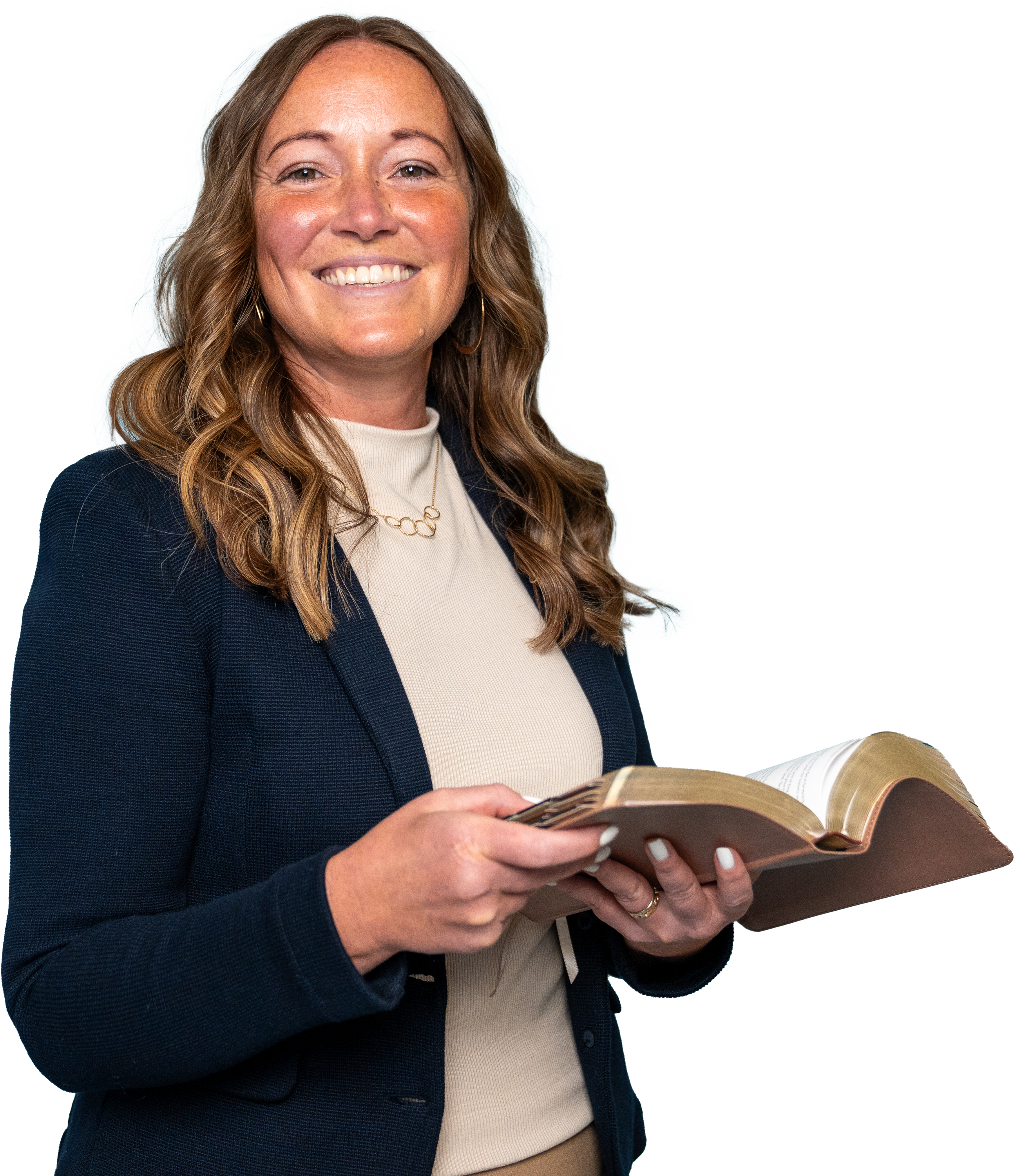
.jpg)
Listen to this article
The Day She Walked Away
Carrie Zickefoose knew it was time to leave. After eight years directing a domestic violence shelter — and fifteen years total as a social worker on the front lines of trauma — she felt the nudge that every faith-filled leader both dreads and recognizes: this season is over. She didn't have another job. She didn't have a plan. She just left.
What followed were three months she describes as coming to the end of herself.
"My identity was all tied up in what I did for a living, and God had to unravel all that. I had to shed who I thought I was."
Those months weren't wasted. They were the furnace. When the season of wrestling ended, three doors opened simultaneously — and one of them led her exactly where her social work degree, her hard-won experience, and her faith could finally work together openly and without apology. That door led to SPA Women's Ministry Homes, a women's ministry serving those who are marginalized, addicted, sexually assaulted, imprisoned, and rejected.
Fourteen years later, she's still there. And the story of how she's led — and how she's been changed in the process — is one worth sitting with.
A Ministry No One Knew Existed
When Carrie stepped into the Executive Director role at SPA, she discovered something startling: the ministry had been operating for fourteen years, and almost no one in Elkhart knew it existed. The finances were thin. In fact, about six months in, the board admitted they had no budget in place to pay her. They had hired her on faith — trusting that God had placed her there and would make a way.
Rather than panic, Carrie did what she does best. She started talking.
"Everyone I talked to wanted to give and be a part of it. I just started telling people what SPA was, and that became my job — letting everyone know."
Fourteen years in, the ministry is still growing. It is a living testimony to the principle she holds close: God opens doors, and our job is to be obedient enough to walk through them — even when we can't see what's on the other side.
The Sponge That Had to Be Wrung Out
Leading a team that serves women in deep trauma creates a particular kind of pressure. The weight accumulates quietly, invisibly — until it doesn't. Carrie learned this the hard way, and she developed a simple but powerful analogy to describe what happens to leaders who never release what they absorb.
"A sponge soaks up all the trauma and stress around me. I had to figure out how to wring it out, so I'm not walking around a hundred times heavier."
Her answer was the Sabbath. Every Friday, she protects the day fiercely — hiking in nature, reading, praying, singing, resting. It isn't a luxury. It's a discipline she spent two years building and now guards like a leader who understands that an empty vessel cannot pour into others.
The practice was tested when a potential board member suggested meeting on a Friday. Everything in her wanted to say yes — she really wanted him on the board. Instead, she explained that Fridays were her Sabbath and asked to meet another day. His response surprised her.
"He reacted with so much respect," she recalls. "That's when I realized that holding onto my boundaries gains me more respect, not less."
She carries the same conviction to her team. She tells them directly: We run hard, and then we rest well. She protects their time off. She models what she asks of them. Because she's learned that you cannot lead people into health from a place of depletion.
What a Difficult Childhood Taught Her — and What It Cost Her
Carrie grew up the second of eight children, born to a sixteen-year-old mother and a father seven years her senior. They lived in poverty in Texas. There were mental health struggles in the home. And there was an unspoken rule that shaped everything: be quiet and behave. Emotions were not safe. Difficult things were not discussed. You tucked it in and kept moving.
She watched siblings run away. She watched siblings harm themselves. She watched things happen that were never spoken of. And she learned to survive by becoming strong — so strong that when hard things happened in her own family years later, her instinct was to find the silver lining immediately, to make everything okay before anyone had a chance to feel it.
It was her daughter who finally called her out.
"Mom, do you realize that every time something bad happens in our family, you try to put a silver lining on it — very quickly? You try to make it all better. You can't sit in the emotion of it."
The words landed hard. And Carrie, to her great credit, heard them. She let her family get messy together. They said the things they hadn't said. They were angry together, sad together, real together. And on the other side of all of that mess was something she had never expected: a beautiful, more connected family.
The lesson followed her into her leadership. A few years ago, during a difficult staff meeting, her team watched tears run quietly down her face. Later, her residential director pulled her aside.
"I love seeing you cry, Carrie," she told her. "I feel closer to you right now than I ever have. I did not know you were human. You are so strong. You never waver. But to see you cry makes me love you all the more."
It was the moment everything shifted.
Vulnerability Is Not a Weakness — It's the Whole Point
Carrie spent two years deliberately studying vulnerability. She read widely, went to counseling, worked through the emotional neglect she had carried since childhood, and made a commitment to her team: from this point forward, when something is personally hard, she would share it instead of walking away from it.
"The very thing I thought would be seen as weakness and would undermine my leadership — the very thing that grew it. Vulnerability is strength, and it actually builds trust."
She had heard the enemy's whispers for years. You're a weak leader. You're not equipped for this. You don't have what it takes. She tested those lies out of necessity — because God was moving her forward whether she felt ready or not. And what she found was that every one of them was false.
Her team's love for her grew. Their respect deepened. The connection became real in a way it never had been when she was performing strength instead of living it.
For leaders who came from backgrounds that taught them emotions were dangerous, this is not a small shift. It is, as Carrie describes it, years of intentional work. Counseling. Inner healing. Books on emotional neglect. Protected Fridays where she could actually think about how she thinks. The work is not optional if the fruit is what matters.
Don't Let Fear Hold the Leash
There is one thing Carrie returns to again and again, a conviction forged in the furnace of her own hesitation: fear will only allow you to go as far as fear allows.
She knew for more than a year that it was time to leave her role at the domestic violence shelter before she actually left. Fear kept her in place — fear of losing her identity, fear of the unknown, fear of stepping off the edge with nothing visible below. When she finally went, she wrestled with God for three months. And then the doors opened.
"God opens doors, and it's our obedience to walk through them — often not knowing what's on the other side. I don't want to be held by fear. I want to always take the leap and do the hard thing."
She describes how God has consistently dropped her into stagnant places — organizations or situations where things had plateaued — and used her to light a fire and move things forward. It's how she has come to understand her own calling: not through a grand vision statement, but through the pattern of what God keeps doing through her life.
She is even dreaming now of stepping onto larger stages — speaking at women's conferences, teaching and telling stories that point people to the truth. It feels vulnerable to say out loud. It also feels like the next door.
What Leaders Can Do This Week
Carrie's journey is not just inspiring — it's instructive. Here are three practices she has built her leadership on that you can begin right now:
Protect your Sabbath like a boundary, not a preference. Choose one day and guard it. Not every week when it's convenient — every week, consistently. Start with small rituals: a walk, silence, a chapter of Scripture. Build the practice before the crisis demands it.
Do the inner work vulnerability requires. If you grew up in an environment where emotions were unsafe, you will not naturally know how to express them. Find a counselor. Read. Pray honestly. Make a commitment to one person on your team that you will show up more authentically, and then do it — even when it feels uncomfortable.
Name the fear, then take the step anyway. Write down the one decision fear has been keeping you from making. Sit with it in prayer. Then ask: if God has placed this in front of me, what is one small act of obedience I can take this week? You do not have to see the whole staircase. You just have to take the next step.
Carrie Zickefoose is proof that the things we think will diminish us — resting, feeling, being seen — are often the very things God uses to make us more. The women at SPA Ministry are better served because their director learned how to be wrung out on Fridays, cry in staff meetings, and walk through open doors without demanding to know what comes next.
That is what faithful leadership looks like. And it is more than enough.
Continue Reading
More articles in Faith in Business
.jpg) Faith in Business
Faith in BusinessWhen Competence Becomes the Measure
Chris Gates went from working his way through community college to leading global technology teams. His hardest lesson was that the competence that made him succeed was quietly keeping him from needing God.

 Faith in Business
Healing Hearts So Freedom Flourishes: Will Frazier's 13-Year Road from Shame to Sanctuary
Will Frazier spent thirteen years fighting a battle he couldn't win alone. Now he's building the safe haven he wished he'd had — for every leader still hiding in plain sight.
.jpg) Faith in Business
Faith in BusinessThe Fan Blade That Changed Everything: Byron Low on Loving People Without a Drum to Beat
A curious engineer on his lunch hour became an executive coach. Byron Low explains why he follows God's nudges, loves people first, and refuses to trust in chariots.

WANT TO SHARE YOUR STORY?
Join our community of faith-driven leaders and share how God is working in your business.
Get Started